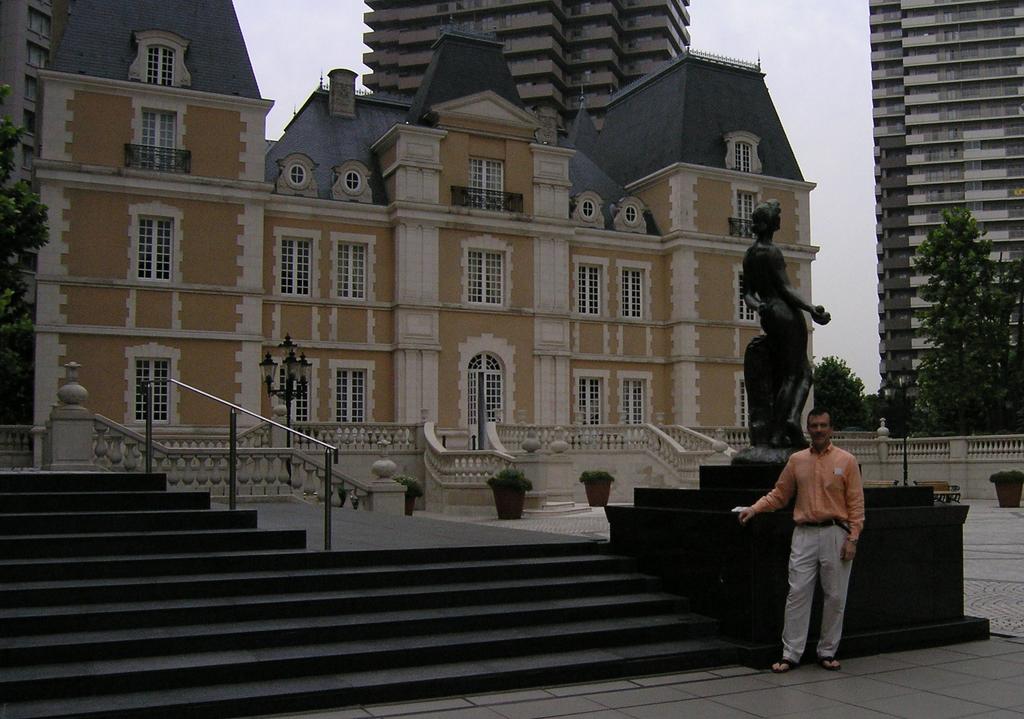
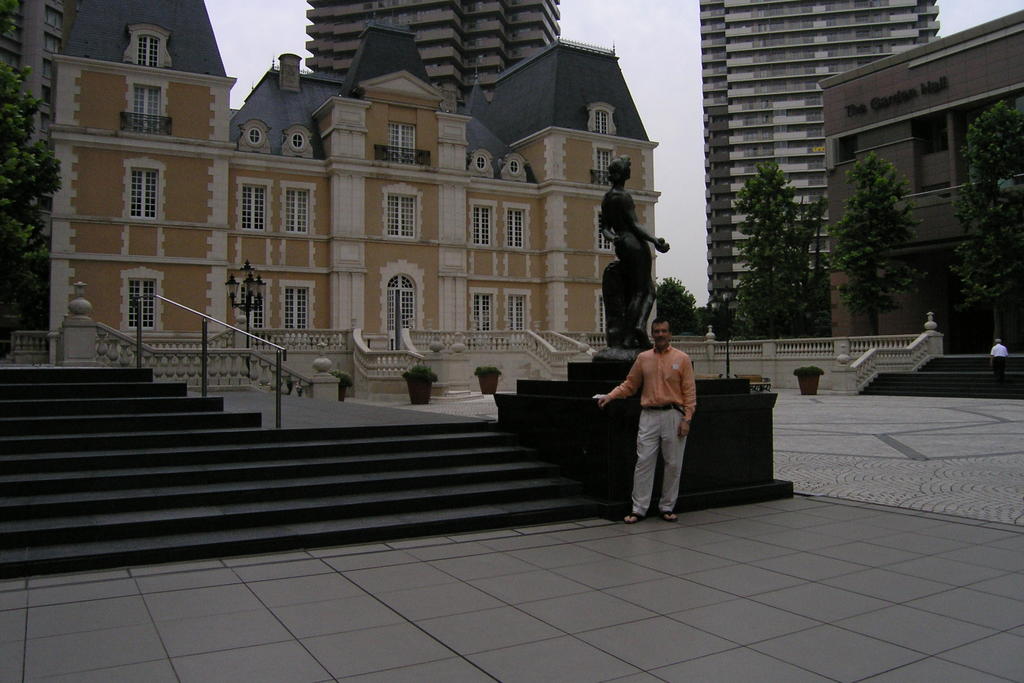
Sunday, August 28, 2005

The Real Japan is


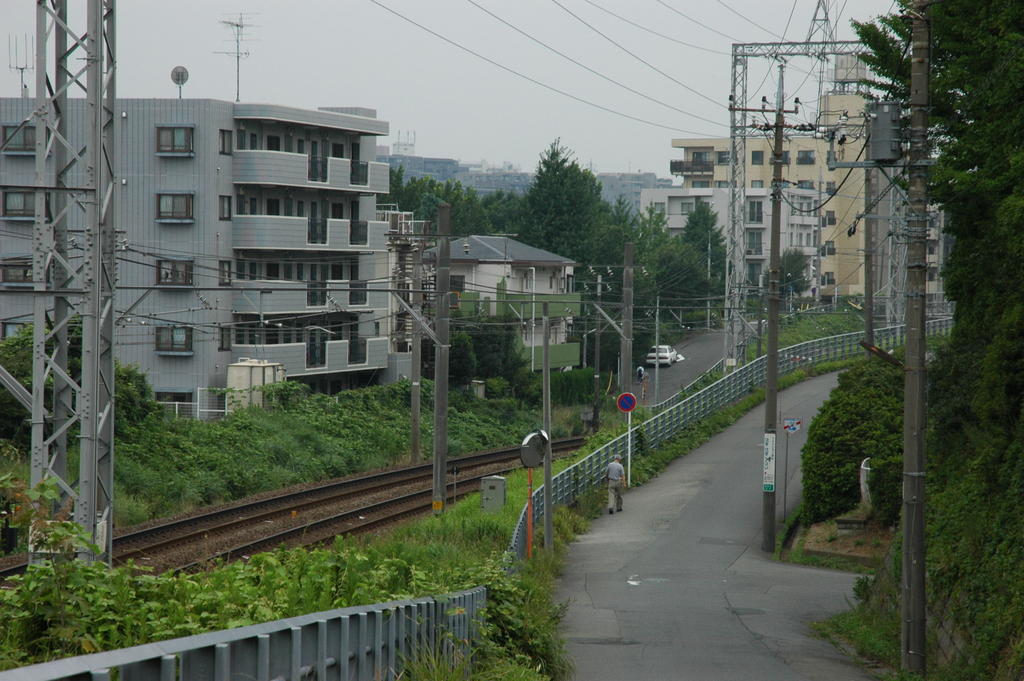
at my station, Kajigaya! I thought this place was pretty boring and not much to see or do. Then I read this article http://www.hackwriters.com/slowtrain.htm and discovered that it is the real Japan as opposed to Tokyo which I guess is the fake Japan. The writer compared Disneyland in the US to Shibuya and Shinjuku in Tokyo and implied that believing that Disneyland was the real USA was the same as believing Shibuya or Shinjuku is the real Japan. I don't know, but I sorta think Disneyland is an amusement park and Shinjuku and Shibuya are real parts of Tokyo where average people work and live. Both are in real Japan. You needn't come to Kajigaya to see housewives shop in Tokyu store, you can see that in Shibuya. You can see people chatting and women with children. So I wonder why Kajigaya is real and the other two aren't? It seems to be an endless search for a myth. Anyway, here's a pic of a mysterious real Japanese photo shop.

Oh, by the way, contrary to the author, Kawasaki motorcycles are neither made in Kawasaki City nor named for it. Actually he has written some interesting stuff, but I was a bit surprised by this article.

Thursday, August 25, 2005

How do you teach people who won't try?

Perhaps it is always a question, but it is especially one in Japan. Adults who basically have to be treated as children. I would say 70% make no effort---or at the very least, no consistent effort to study or practice anything they "learn" in "class." Many seem to want nothing but entertainment (this is especially true at the eikaiwa chain schools it seems). Now most teachers know that their class should be interesting and useful, and hopefully fun. However, few other than 5-15 year olds place "fun" as one of the most important parts of a class. It isn't unusual here though. Forget studying and preparation. Just go to a "class" an hour or two a week and maybe try to say something if it is not too troublesome and never,ever have anything to do with English until the next class and then claim you can't learn English because you have some genetic Japanese inability to speak English. Of course it could be because you are a horrible student if you were anywhere else but Japan.

Last week I was at a Starbucks listening to a "teacher" do a private lesson with 2 Japanese girls. He came in and ran his mouth for 45 minutes. The 2 girlies giggled (in English?) and one actually muttered 2-3 responses in English. They paid him 3000 yen---about $27---and were very satisfied. I guess he was their entertainment and fulfilled the stereotype of Western foreigners as entertaining, but ignorant buffoons. However, they paid him. He did no work and did not teach a damned thing. Who were the ignorant buffoons?

No wonder companies like NOVA, Berlitz, et al get away with what they do. No wonder the Japanese spend millions on English and are barely above North Korea in English ability in Asia.

March 6, 2006 update: I have heard that at some of the private language schools in the U.S., things aren't all that different. I have spoken to a few guys who taught at company-owned private schools---and have heard similar horror stories. When I student taught---or observed--- in the US, it was always at government schools. Of course teachers there can tell you horror stories of some of the students too.

Thursday, August 18, 2005

Danger along the Tama River

One of the most dangerous things one can do in Japan is to ride a bicycle. In an earlier post I mentioned some of the dangers as examples of why. To be blunt, people simply do not watch where they are going. They focus on the front wheel of their bike or will ride while looking to the side or behind themselves while utter disregard for their own safety or that of others. If they do see a danger, they are very reluctant to take any action to avoid it or to even use their brakes. Generally, they will continue on their way and it is up to you to avoid it. (I quit riding on Sundays because of the number of unbelievable accidents I saw, most of which were due to pure negligence.)

In May I was hit by some old guy who came flying down a hill out of control. He looked right at me---stared in fact---and headed out of his lane directly toward me. He made absolutely no effort to slow down or stop, but had a look of total panic (and profound idiocy) on his face. I was barely able to avoid a head on, but he still hit me hard enough to badly bruise my shoulder. He kept on going, until---very un-Japanese like---I started cussing him in both English and what I could think of in Japanese. He stopped, came back and gave me the standard phony apology. There was nothing I could do so I dropped it.

Yesterday, I was coming around a blind curve, and knowing the special dangers in Japan, I slowed way down. Sure enough as soon as I turned the corner there was a poser in his full cycling gear and a nice road bike on the wrong side of the road directly in front of me. He did slow down and utter a "gomen" and move out of the way after I had stopped to avoid a collision. This marked him as different than the average cyclist or pedestrian.

I think a lot of this, especially the habit of pedestrians to blindly walk around and carelessly block entire roads or walk directly into the path of others after they have seen and are aware of them, to be an example of the passive-aggressive characteristics which one observes here. "I may be slow, lazy and weak, but you are gonna have to act that way too. I will control what you do."

Sunday, August 14, 2005

An unusually "green" area in Kawasaki


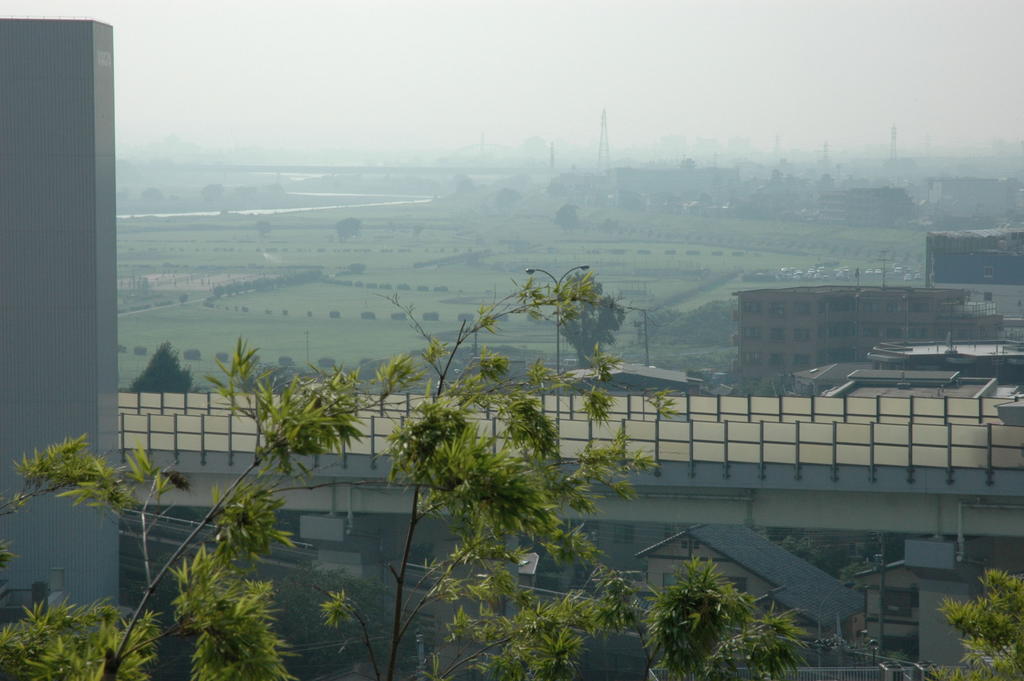
This looks much nicer than it is, but at least is is "quiet" and even has a hill. Well, quiet, except for the train lines. A rather expensive area to live in compared to mine. About 20 minutes away on foot.

Beautiful Tama River on an August Saturday afternoon


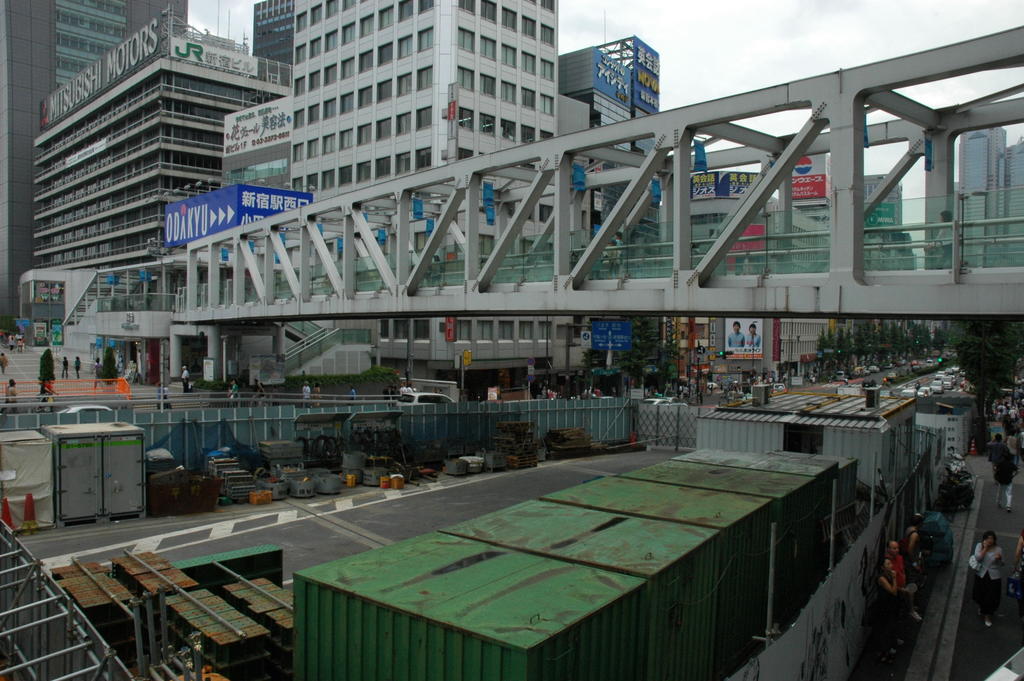
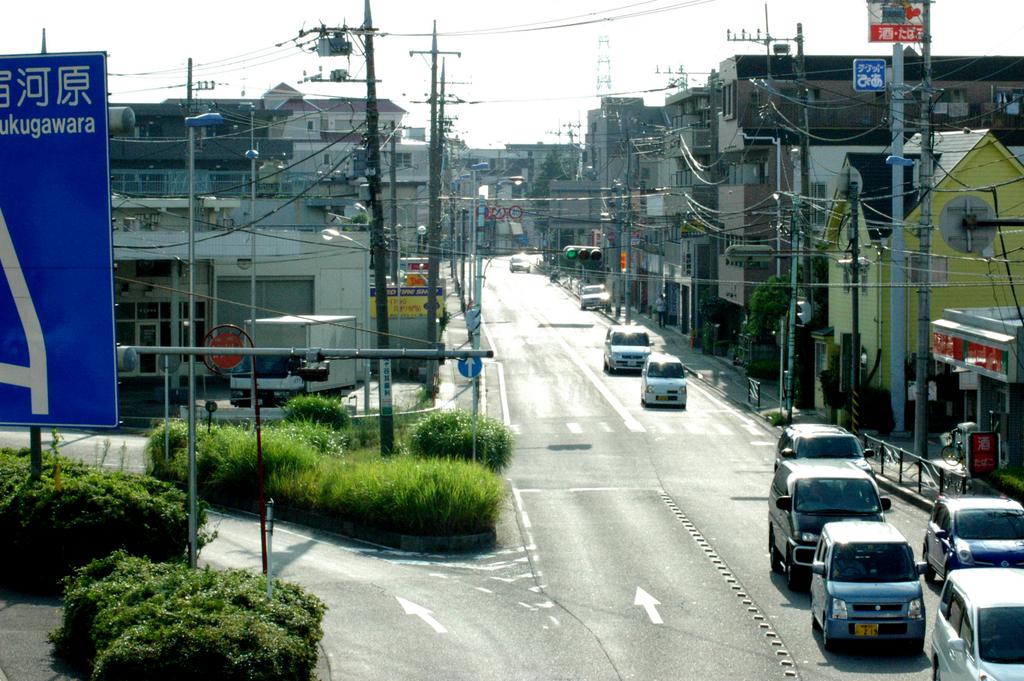
The Real Japan


People have been looking for this since Isabella Byrd in the late 1870s. It is more of a Western fantasy (or fetish) than it ever was a reality. The top two are near Shinjuku JR station, the 3rd is near Highway 246 about 500 meters from my home. Notice the love and respect for nature and the environment. I don't know, but for some reason this seems much more real than zen Buddhism, anything from The Last Samurai or Lost in Translation.

Saturday, August 13, 2005

If you are a student

Why would you pay the huge price at Berlitz when you get little or nothing more than at NOVA or GABA? You certainly will not get nearly as good teaching or course or material as you would at some small schools. You are basically a number there. At a big LC, the "teacher" probably don't even know your name. They have no time to prepare for your class. They can do almost nothing extra to help you. Berlitz training is very light and quick. Teachers cannot use it when teaching. Why pay for that? I admit, I can't understand it. I would never take a lesson there.


If you are a company, why would you pay for this? Is it because Berlitz is a famous brand name? Guess what; Berlitz Japan is not the same as Berlitz in the US. Even in the US, people who are serious about learning a foreign language choose other means, such as community colleges or universities. Berlitz is famous yes, but more often for their bad travel guides than for language teaching.

Interviewing at an eikaiwa

A lot of people seem to want to know tips for interviewing at Berlitz, NOVA, GABA, ECC, GEOS and the other chain "conversation schools." I can't give you any except that as we all know, no special ability, education, or skills are needed. Just "enthusiasm" and appear dumb and passive enough to follow their nonsensical "methods" and whatever other garbage they will give you. My only experience was with Berlitz. The interview was advertised as "very competitive" but it was the least competitive I have ever seen. Basically, they scheduled a group of us for an interview on the same day, time, and place and we sat and chatted about Berlitz after we introduced ourselves. The HR rep ran it, and gave us a quick, semi-accurate overview of a polished, ideal, Berlitz (Naturally he left out the parts which would cause concern such as supervisors switching "teacher's" contract hours around and in effect, defrauding them of salary .) Everyone at that interview showed up at the "training" week and passed the "training" too. You would have to be an complete and utter moron to fail, and even that would give you only a 30% chance of doing so.

Remember, at these places you are not teaching, and in fact, neither the management nor most of the students really want you to teach. It's all fake, you know....

So the question is, why would you want one of these garbage jobs if you are at all interested in teaching. (Or even real employment?) These things are not in the least challenging, you will learn nothing at any of them except for bad habits which could get you fired in any other job.

My advice is, unless you need it to get a visa, avoid the Berlitz/NOVA/GABA chain schools like the plague. If you have any real teaching experience or training, you will be extremely dissatisfied. Of course you will be more so if like some may do occasionally, you are cheated out of earned pay. Contrary to myth, not all schools nor English teaching jobs in Japan are like these. Avoid them.

I can't stand unions, and this one is especially weak and ineffective (normal in Japan) but check out this site for info on what Berlitz does. http://berlitz.generalunion.org/global.htm

Sunday, July 24, 2005

I miss this weather now


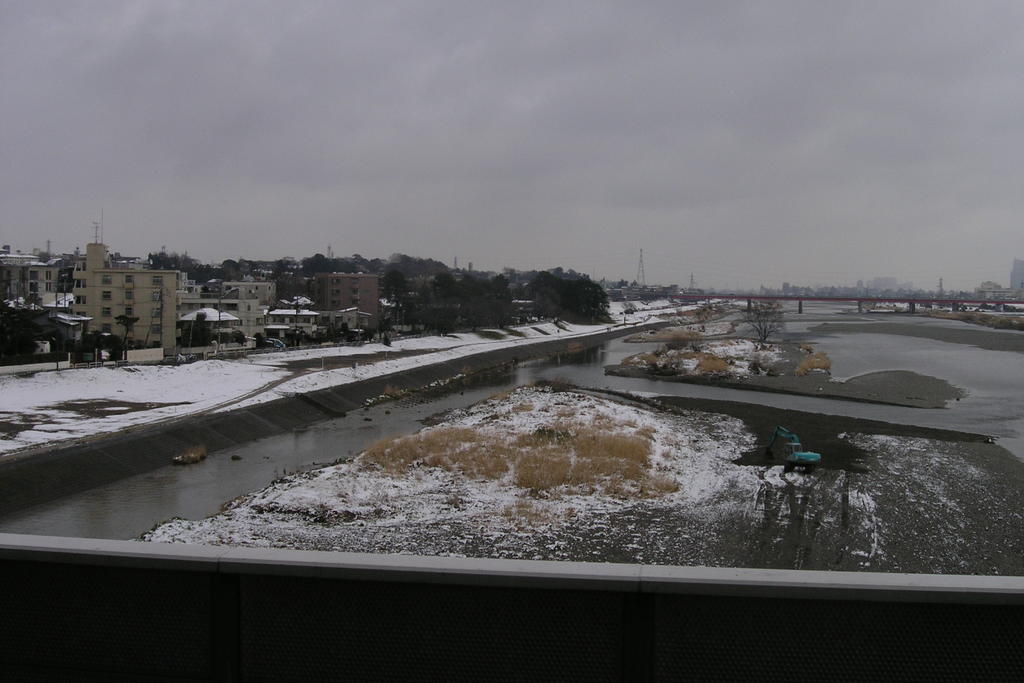
The Tama River near Futakotamagawa last March after an unusually late snowstorm. Loved it then---have always loved snow, even when I lived in Montana. Would like some now although it would interfere with cycling to some degree.

Thursday, July 21, 2005

Rainy season is over

for the year. Now the real heat begins, but so far it has not been as hot as last year. But even with the A/C on the apartment temperature is about 83 degrees. Japanese housing is not know for good insulation. If fact, there is almost none. Think of the energy that could be saved if proper insulation were used. Wasn't the Kyoto Protocol signed in Japan? Think maybe Japan would be serious about it? Wonder why they waited until after Bush withdrew from it in 2001 before ratifying it themselves? Serious?

Monday, July 18, 2005

Holiday

A three day weekend. My wife and I went to see the Mel Brooks play, The Producers. It was excellent. Much better than expected. Next month a Japanese cast takes over and it will be in Japanese, so we hope to watch it again before then. She had to get the tickets last year to get the good seats we had. Unlikely that we will get such good seating again.

Sunday, July 17, 2005

Tour de France

Since the Tour is not broadcast on any Japanese TV station---except possibly one of the satellite channels, I have one again been following it on the internet. This year I have been able to listen to it live on Eurosport.com.

The first time I lived in Japan---Toyama City in 1991-92--I had to get most information via shortwave radio. What a difference the internet has made. I can get almost the same information about anything nearly as fast as I could when in the US. Even in the last year things have continued to improve---more audio is available, and even video is increasing. Can't wait until I can watch the Tour live even if I have to pay to do so. Unfortunately, many sites block people outside the country of origin from listening to or watching broadcasts.

Anyway, it's stage 15 tonight and Armstrong is still in yellow. He has been surprisingly strong this year even when the Discovery team wasn't around to help him. He certainly whipped all the competition, esp Ullrich and Basso yesterday. A lot of people now hate Armstrong mainly because he has been so successful---even Americans. Many were claiming that it wasn't Armstrong, but his team that won the six Tours. Yea, his team is important, but it seems unlikely that any other rider would have had the wins he did even with the same team. Since this is his last year, I kinda expect the popularity of the Tour---an thus the coverage--- to decrease in the US from next year. Then we'll hear all the US whiners complain about the lack of coverage. The same people who whine and complain about Armstrong.

Thursday, July 14, 2005

In Ebisu


I love this area in Tokyo. Near Ebisu station there is a shopping area which looks very nice. Not a lot of shops especially, but some decent restaurants and a movie theater which shows smaller films. The only place to see Woody Allen films, for example. I used to go to this area to eat lunch outdoors when I was working in Tokyo. A lot of people walk their dogs here on weekends, so if you like dogs you can see a large variety of mostly purebreeds.

Monday, July 11, 2005

If you really want to learn

customer service and how to do business in Japan, the best thing to do is recruit you own students---especially corporate clients. If you are working for one of the assembly-line big eikaiwa chain schools, it is unlikely you will learn much of anything, including how to teach.

However, even one day working with an HR manager will teach you more than you can learn working for someone else---even a good school. Gotta advertise, sell, then follow through on your promises. You needn't do any of that at most places. (Some do expect you to sell their services though).

Monday, July 04, 2005

July 4

U.S. Independence Day. It brings back a lot of memories of the U.S.--especially in West Virginia. I remember being home about 23-24 years ago in firing a muzzleloading rifle into the air (no ball--powder only) in the evening as a celebration. I also remember in 1979 during the Carter oil crisis driving around on fumes because gas stations were closed by government order.

It also makes me aware that as much as I complain about Japan---mostly the government---that the U.S. is not perfect either. In fact, I probably had more criticism of the U.S. than I do Japan. Of course, that is what patriotism and citizenship is---not just blind acceptance of everything. Democracy exits in Japan to the extent that it does because of the U.S. what the U.S. did--often against the wishes of the Japanese government--after WW2. So I suppose I can freely make critical comments in Japan largely thanks to those postwar U.S policies. I am sure that thought will cause many to soil their panties.

Interesting homework

Unfortunately, I had to cancel my Japanese class today with Hiramura-san. However, she came up with a clever idea of recording a Japanese T.V. drama and splitting it into small segments so that a student can use it to practice listening comprehension. She pre-teaches difficult vocabulary, so it makes it possible to get most of what is being said in each segment. Listening skills are my weakest area, so this is a beneficial way to improve---even though the speed and language used is above my level.

Improving actual speaking and listening is such a slow process. I wonder how so many Japanese can stick to it in Japan where the opportunity to actually use English is so rare for most.

Rainy season

Another wet rainy day. Some places were suffering from drought, but I wonder if they still are. The rain seems to have been increasing and the number of rainy days more than last year. It is even nice and cool today. Didn't even have to turn on the A/C. Thank goodness as the expnse is tremendous.

Wednesday, June 29, 2005

Hot weather in Tokyo

Already there have been record temperatures this year. Yesterday it was 35 degrees Celsius in Tokyo. When I was cycling on highway 246, a thermometer I had with me registered 100 degrees at about 11 am. Rainy season officially started last week as I recall. It has been rainier so far this year than last it seems, but a lot of areas are still threatened with drought.

Thursday, June 16, 2005

Japanese government manipulation of science

I suspect most people know of the kidnapping of Japanese citizens by the North Koreans. Perhaps you even know of Ms. Megumi Yokota whom North Korea claims to have committed suicide in North Korea. When what were said to be her remains were returned to Tokyo, DNA tests were conducted which supposedly showed the remains were of 2 different people, not Megumi.

This has caused the tensions between the two countries to continue to rise. North Korea obviously cannot be trusted very much here, but how about the Japanese government? But did you know that 2 DNA tests were conducted, the first by the government which determined that it was not possible to determine whose remains they were or weren't after they were cremated at 1200 degrees centigrade. The second test was conducted by a lecturer at Teikyo university who had no experience testing cremated remains for DNA. The same scientist later told Nature magazine that the test really proved nothing. The Japanese government, as is their custom, did not debate the point, but instead attacked the magazine. You can read the full story at http://www.japanfocus.org/article.asp?id=306 (Sorry, dead link, article has been removed by Japan Focus. Why?)

The story in short, available from several sources on the web, including Time and Wikipedia:

An article in the 3 February 2005 (Nature) issue revealed that the DNA analysis on Megumi's remains had been performed by a member of the medical department of Teikyo University, Yoshii Tomio. Yoshii, it later transpired, was a relatively junior faculty member, of lecturer status, in a forensic department that had neither a professor nor even an assistant professor. Remarkably, he said that he had no previous experience in the analysis of cremated specimens, described his tests as inconclusive and remarked that such samples were very easily contaminated by anyone coming in contact with them, like "stiff sponges that can absorb anything." In other words, the man who had actually conducted the Japanese analysis pronounced it anything but definitive. The five tiny samples he had been given to work on (the largest of them 1.5 grams) had anyway been used up in his laboratory, so independent verification was thereafter impossible. It seemed likely as a result that nobody could ever know for sure what Pyongyang's package had contained.

When the Japanese government's chief cabinet secretary, Hosoda Hiroyuki, referred to this article as inadequate and a misrepresentation of the government-commissioned analysis, Nature responded, in a highly unusual editorial (17 March), saying that:

"Japan is right to doubt North Korea's every statement. But its interpretation of the DNA tests has crossed the boundary of science's freedom from political interference. Nature's interview with the scientist who carried out the tests raised the possibility that the remains were merely contaminated, making the DNA tests inconclusive. This suggestion is uncomfortable for a Japanese government that wants to have North Korea seen as unambiguously fraudulent. ... The inescapable fact is that the bones may have been contaminated. ... It is also entirely possible that North Korea is lying. But the DNA tests that Japan is counting on won't resolve the issue. The problem is not in the science but in the fact that the government is meddling in scientific matters at all. Science runs on the premise that experiments, and all the uncertainty involved in them, should be open for scrutiny. Arguments made by other Japanese scientists that the tests should have been carried out by a larger team are convincing. Why did Japan entrust them to one scientist working alone, one who no longer seems to be free to talk about them? Japan's policy seems a desperate effort to make up for what has been a diplomatic failure ... Part of the burden for Japan's political and diplomatic failure is being shifted to a scientist for doing his job -- deriving conclusions from experiments and presenting reasonable doubts about them. But the friction between North Korea and Japan will not be decided by a DNA test. Likewise, the interpretation of DNA test results cannot be decided by the government of either country. Dealing with North Korea is no fun, but it doesn't justify breaking the rules of separation between science and politics."


Saturday, June 11, 2005

Welfare/unemployment for English speaking foreigners

That is what eikaiwa really is. For a variety of reasons, the Japanese are reluctant to hire non-native Japanese. This can be because of the fear that a non-native Japanese won't fit in, because of poor Japanese language skills, or because they simply don't want non-native Japanese in the company, or because some are born bigots and racists like Blinky Ishihara and do not believe a non-native Japanese (defined by "blood"--- a person of recent Korean ancestory is not considered native Japanese even if he/she were born here. In fact, the Tokyo government led by Blinky, prohibits non-Japanese citizens from being in a position to supervise the god-like Japanese) should work in many positions in Japan.

Thus, we have eikaiwa. When I first went to Bershitz, one guy who had been there for a while told me that I shouldn't take it as a job. It wasn't one. I finally figured out that he was right after 2 years there. I went to part time to enable myself to really teach elsewhere---or as close as one can come to teaching EFL in this country---and to give myself time for improving my Japanese and learning Chinese as well as personal time. Bershitz is simply welfare---a stable income which requires no work, thought, or effort. It is still hard to accept that it is not a job at times, but I am getting better at it. What about those who pay money for learning a language there? Well, buyer beware. There are good schools in this country, but learning requires effort and the majority are primarily interested in being entertained and perhaps magically becoming proficient in English. If anyone is that stupid, frankly they deserve what they get. I am ashamed to say that, but I have to adopt that attitude to continue my welfare program.

Unfortunately, like all welfare/unemployment programs, it can become addictive. Money for nothing is attractive, so one has to use that time to improve his/her skills and marketability. Most Bershitz welfare recipients don't do that---unless one considers getting drunk marketable outside of eikaiwa, but it's a free country.