Monday, February 27, 2006

Hakone


Beautiful as always. It rained heavily all day Sunday as it has the last 3 times we have come here. But, it cleared up today. And the ryokan is excellent as is the food...
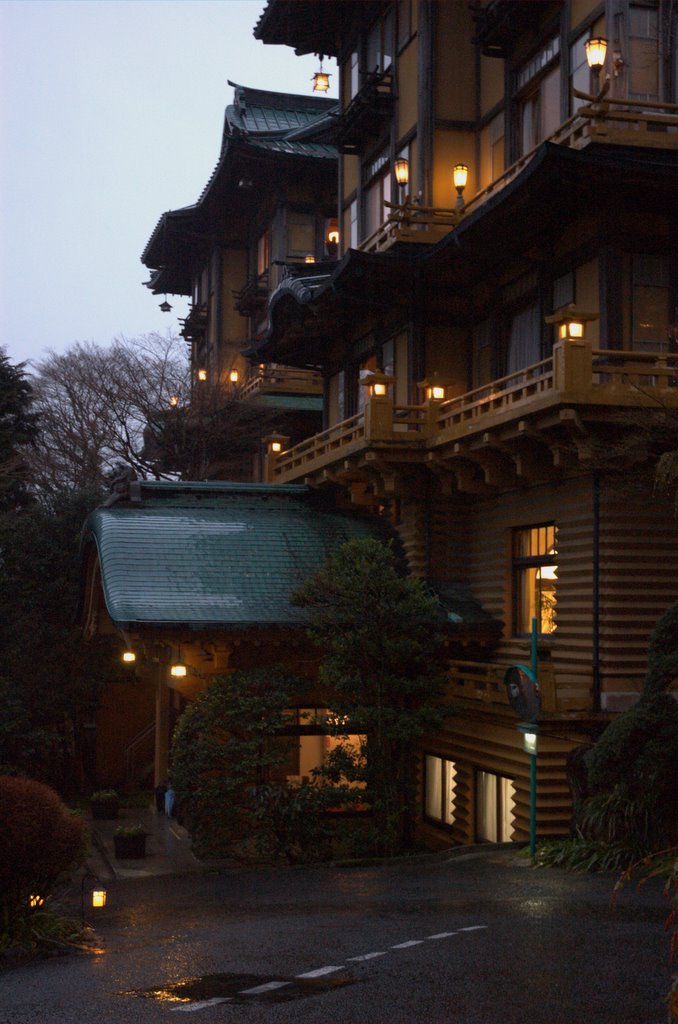
Fujiya (main) Hotel Sunday night and...well a ceiling light.

Saturday, February 25, 2006

Weekend in Hakone

Naturally, it is supposed to rain, but we will be leaving for Hakone, a resort area near Tokyo. Probably one of the closest and most convenient for people who live here. That is why it is usually crowded. We will be taking the "Romance car." Nothing especially romantic about it I guess, it's just the name of the train. If you want romance, you have to create it on your own.

Short trips like this have become part of our life here as opposed to longer cross country vacations that we would sometimes take in the US. We have several short excursions like this every year.

What is exciting about this trip, other than a chance to breathe fresh, clean air and see a few trees and hills that aren't surrounded by (or covered in) concrete, is the fact that we will be staying in a ryokan. A ryokan is a traditional Japanese inn. But the best part is that we will be having in-room meal service. Usually, in fact always in my experience, the food is absolutely delicious. Most people who have never eaten much Japanese food think of rice and sushi or some strange unusual food. You do get unusual food as compared to most Tokyo restaurants (of which many serve western-style food), but the food often includes regional specialties. In Nikko, it was yuba, which is made form tofu and has numerous forms. My wife didn't care for it, but I loved it. I am not sure if there is any specialty in the Hakone area---the last time we went there, we ate French food at Fujiya Hotel. Fujiya is where John Lennon and Yoko Onno lived for a while in the 70s. It is a beautiful hotel, and one I would recommend if you want a western-style room in a hotel that looks stereotypically Japanese from the outside.

I should have pics from the area sometime in the middle of next week.

Thursday, February 23, 2006

It's All Over the Place

Naturally, discrimination due to race, sex, ethnic group, nearly anything exists all over the world. As I have often written about, it certainly exists in Japan. The Japanese government goes out of its way to avoid the issue, claim otherwise, justify it, or flat out lie about it.

But Japan is really not that bad. For most, especially those of European (Caucasian) background, it is for the most part subtle and benevolent. There are other countries in which it is much worse. In a lot of Asia apparently, it is just fine to advocate the idea of a "pure race" or "pure blood." This idea has significance in Japan, but it is not something that hits one in the face here.

I remember when I was in the Air Force years ago and spent 2 years in South Korea. I loved Korea and the Koreans, but it nobody ever assumed that the Korean did not practice open discrimination. For some reason, nobody complained much, like we tend to do about Japan. I wonder why this is? Lower expectations for the Koreans? Fewer foreigners living there?

Anyway, the Koreans, unlike the Japanese, have no qualms about getting in your face about something. If they don't like you, you'll probably be more likely to know it.

Here is an interesting article about discrimination against Koreans born of Korean mothers and American fathers and the "pure blood" idea pushed in the education system there.

The article is at http://www.iht.com/articles/2006/02/22/news/mixed.php

If that link vanishes, see it at: http://archive.wn.com/2006/02/23/1400/seouldaily/ From an ostracized class, a hero for Koreans

Should both disappear go to: http://archive.wn.com/2006/02/23/1400/p/fe/5220bccd58e2f0.html

Should all those links be missing for this post, searh the internet for an article titled, From an ostracized class, a hero for Koreans from the International Herald Tribune, originally published on 22 February 2006.

Rethinking Kyudo

I have discovered that there are a number a public archery ranges in this area. I still find kyudo quite interesting and might still go into it, but perhaps as a sport, regular archery would fit my temperament better.

The more I read about kyudo, mostly books written by the zen-seeking, mystery-of-the-Orient believing, unique Japanese spirit loonybird crowd, mostly from Europe, Australia, and the U.S., the more I am turned off by it. As I wrote about below, that connection---especially with zen---seems to be a recent arrival, not an original Japanese idea. A supposed "bible" of kyudo for the mystery-of-the-Orient, unique Japanese spirit crowd is Kyudo: The essence and practice of Japanese Archery http://www.amazon.com/gp/product/4770017340/sr=8-1/qid=1140672744/ref=pd_bbs_1/002-8488976-0271210?%5Fencoding=UTF8 I am reading this book now, but it has started out with the mystical heeby-jeeby that I cannot tolerate. So if this is how kyudo is practiced, I want nothing to do with it.

However, of the Japanese whom I have spoken with about kyudo, none seem to take the heeby-jeeby seriously. At least not in the quasi-religious way that non-Japanese seem to. So how much it really infiuences the actual practice of Japanese archery, remains to be seen---for me. (When I mentioned that accurately hitting the target was less important that all rituals one must do before and during shooting, I was almost scoffed at. Admittedly, the folks I spoke with are not currently in kyudo. Some were in clubs in university, a few never actually participated, so my sources are not the most knowledgeable.)

Wednesday, February 22, 2006

Studying Japanese

It is interesting that I have studied a lot of theory about how a language is acquired, both first and second etc., and have a good idea about the standard strategies to suggest to students studying English, but am not so successful in following my own advice when studying Japanese.

I find myself making the same (supposed) mistakes many students do when learning English. (Focusing too much on form/grammar etc.) when speaking---in class anyway. It is nice to tell someone not to do this, but damned hard advice to follow. It is hard to define what "too much" is. Of course, one has to be somewhat cautious about being too dogmatic with these theories. They are mostly just the best evidence, not a universal truth.

I have found that reading a lot---in addition to listening practice---has helped my listening comprehension considerably. I can't say it is definitely because of the increased focus on reading, but my listening ability has improved at a faster pace since I started it. It hasn't helped my speaking as much, but speaking improvement usually follows listening improvement. They are rarely concurrent, and speaking improvement rarely precedes listening improvement.

I just passed the nationwide Japanese test, but have a ways to go to pass the next and probably the most challenging level. I studied Japanese in college via grammar-translation which does little to help one communicate. I studied at Nichibeigakuin in Tokyo for 3 months in 2000, but quit mainly because of too many people in one class (13) and the huge amount of homework given daily. (4 hours minimum. Too much for someone working full time. It was more than 4 hours if one had any problems.) I only got back into serious study just over a year ago.

Sunday, February 19, 2006

Around the Neighborhood


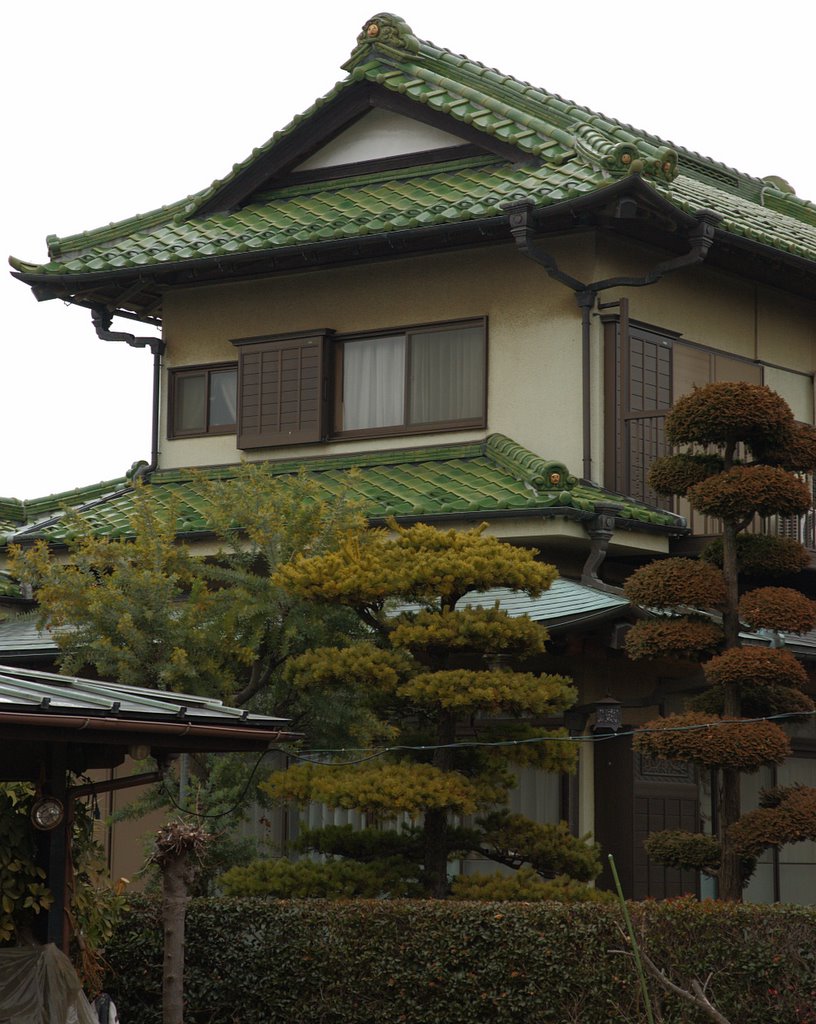
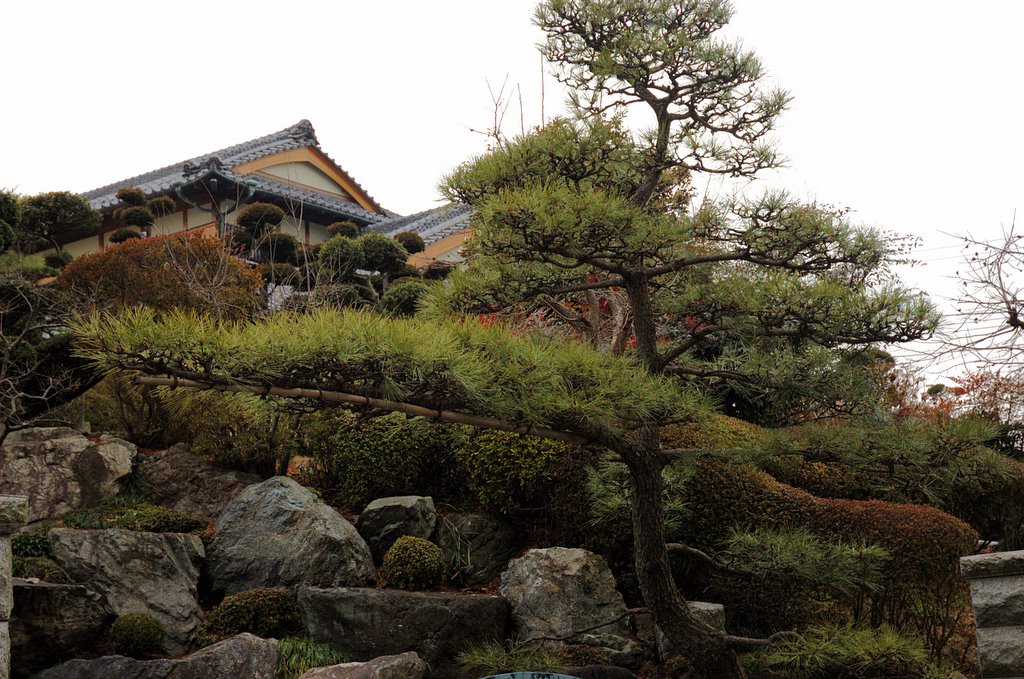
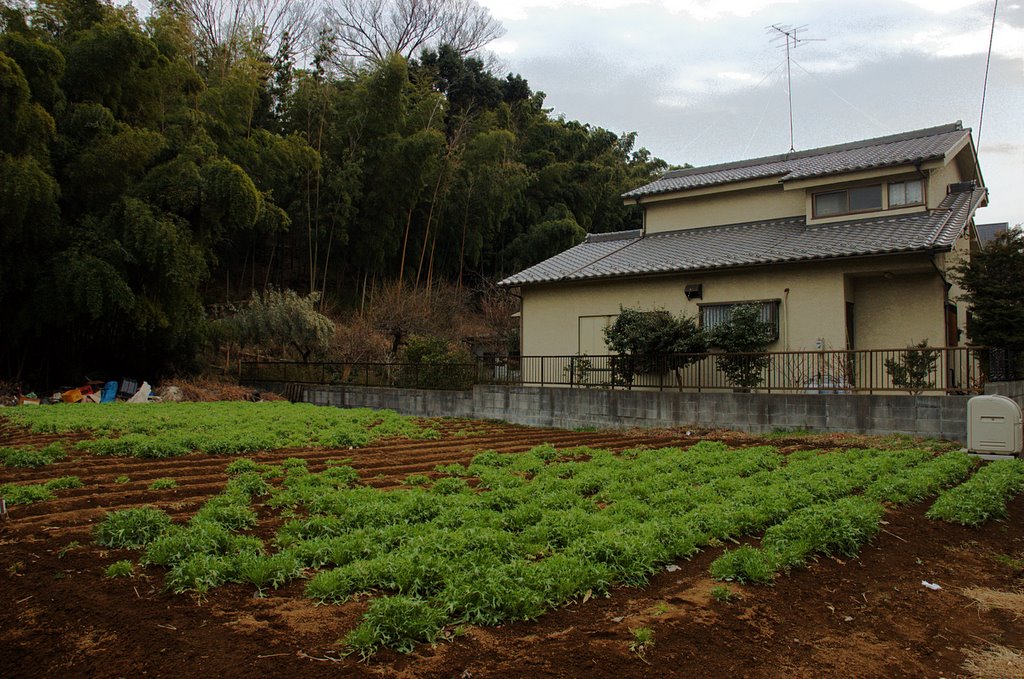
One big contrast of Japan vs. the US is that Japan is usually much quieter. Even in the middle of a huge city. Even in an apartment. Was a very quiet and enjoyable walk tonight. There are some very beautiful---and absurdly expensive---houses around too. And, of course, a lot of small "farms." The farms are run mainly for the tax breaks. We'd call them gardens in the US.

Friday, February 17, 2006

A Blog I Wish I Could Write

about Japan. I just found this and love this guy: http://www.pliink.com/mt/marxy/
He also has very little patience with the "Japan is uniquely unique" garbage indoctrinated in the Japanese and swallowed by naive foreigners.

Little Black Sambo is back in Japan.

(Note: This post has been self-censored.)
It had been pulled years ago because of foreign protests about its racist connotations--especially "Sambo" which is a racist epithet for black people. The Japanese, who are said to have no racist feelings towards anyone, were truly shocked to hear that the book was considered racist.

Here is an interesting post with more details and analysis: http://www.pliink.com/mt/marxy/archives/000579.html

Kyudo and Zen

As I noted below, I am considering taking up Japanese traditional archery. One of my reasons for this is to become more deeply involved in something "Japanese" where I would also have to communicate using only Japanese and hopefully get somewhat out of the "special treatment" pit that non-Asian Japanese are put in.

One thing that worries me in addition to the tendency to waste time on the irrelevant (in my mind) is the heeby-jeeby stuff about Zen. Most Japanese know nothing about Zen and pay no attention to it. I took a Japanese Buddhism course in college* and have forgotten most of it, but still know more than 99% of the Japanese who I have spoken too. However, kyudo seems to have been converted by some into a semi-religious Zen experience. Just exactly what I have zero, none, zilch interest in. Hopefully, I will be able to find a club where I don't have to worry about this. If not, I will just start back into regular archery with some disappointment.

Kyudo was not so strongly associated with religion or zen until Eugene Harrigel published Zen in the Art of Archery in 1948 (originally in German as Zen in der kunst des Bogenshiessens in 1948). Before then, the Japanese never thought of a mystical Zen-connection with shooting a bow. Now nearly everything one reads or hears about it, from Japanese and especially from non-Japanese, claims that it is spiritual training more than it is archery. See this paper: The Myth of Zen in the Art of Archery by Shoji Yamada from the Journal of Japanese Religious Studies: http://www.nanzan-u.ac.jp/SHUBUNKEN/publications/jjrs/pdf/586.pdf

This is the type of nonsense that drives one nuts. Everything about Japan in the eyes of westerners has something to do with zen. Japanese individuals are often referred to as having some "zen-like" characteristic. Japanese movies are all related to zen. Director/actor/comedian Beat Takeshi has said he often tells foreign interviewers that his film ideas are somehow zen connected even though it is not true. He has been asked about it so many times, he will just agree and say, "Yea, it's zen."

The Japanese don't sit around trying to solve koan. They spend little time in a temple being hit with a stick by a rich monk for losing concentration during meditation. Few seem to have much interest in eliminating desire. Few have any interest in any religion, except for the fundamentalist Japanese religion of the uniqueness of the Japanese. That is the true religion of Japan. Zen is for naive foreigners seeking the mysteries of the orient.

*One of my professors (Japanese politics) who was Japanese said that Buddhism was never something practiced or believed in by the average Japanese---only the elites practiced it as a religion in the past. This would truly disappoint many of the mysterious Orient, zen nuts.

Thursday, February 16, 2006

Westerners Cannot Understand Haiku--Nihonjinron 2

(Note: This post has been self-censored.)
A student of mine was telling me about a book written by a Japanese math "scholar" in which claim was made that westerners cannot truly understand haiku. You see, we can't picture the image represented by the poems.

For example, Basho's famous poem of the frog goes something like:

An old pond.
A frog jumps in.
Splash!


Westerners cannot get this. We cannot discriminate between one frog and a number of frogs:

An old pond.
Frogs jump in,
Splash!

This fool posing as a scholar (note: I later learned that this was Fujiwara Masahiko) is a perfect example of the those who come up with this ninhonjinron (theory of the Japanese) garbage. And most is as idiotic as the above.

This kind of thing is wide-spread in Japan. You always hear the Japanese talking of "we Japanese" much more than one hears other nationalities talking about their own specialness, uniqueness, and implied superiority.

Usually the thinking behind it is as shallow as the ignorance of others required for someone to believe it is. Let's see, most places have ponds, most have frogs, probably most people have seen and heard a single frog jump into the pond, or could imagine it, so why couldn't foreigners understand this haiku? The real question is, what kind of mind could come up with this ? A scholar????? A borderline r--c-st?

It is something you must get used to in Japan. You generally have to ignore it because you aren't going to change many opinions. The fact that you as a foreigner don't accept or believe it, or that you can refute it, seems to reinforce the belief that the Japanese are uniquely unique among many Japanese.

Monday, February 13, 2006

RE: A Change in Direction. Criticism in Japan

Below I wrote about a change in the focus of this blog and mentioned how criticism of Japan isn't always well-tolerated. Here is an article about a recent conviction of an Japanese elementary school teacher arrested and punished for handing out pamphlets to adults near a Japanese military base: http://japanfocus.org/article.asp?id=519

Were one in the US and such a thing happened ( which seems entirely possible nowadays), you could expect a lot of outrage and moral as well as legal support. Haven't seen any of that in Japan...

Sunday, February 12, 2006

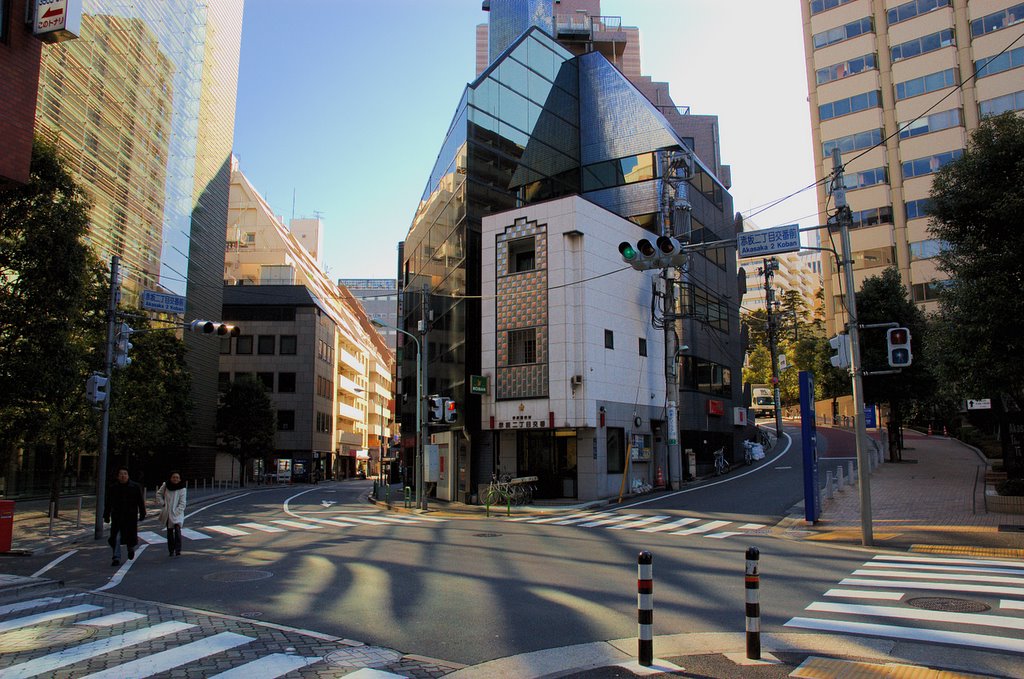
Akasaka-mitsuke


Last Sunday we had lunch here at Ann Millers before watching Hotel Rwanda. A group of yakuza were eating in the rear when we were there. They are not an uncommon sight in this area. Their van was parked in front in a no parking zone.


Archery in Tokyo

I have decided to get back into archery and am looking for a local club/range. In Japan, possession of any type of weapon---firearm, swords, airguns (except for the "softair" guns) etc---are very, very strictly regulated or out-right prohibited. Huge kitchen butcher knives are all over the place and most murders seem to be committed with those. (One town even started regulating them as I wrote about last year.) So I was shocked to see no restrictions apparently on bows, including high-powered compound and recurve bows.

I have also become very curious about kyudo, traditional Japanese archery. Japanese long bows are used, and it appears to be more about form than anything else---very Japanese. There seems to be a lot more sitting and waiting, and concentration on basically---to me---unrelated trivial details. One may wait several hours to shoot a couple of arrows during a match, and (I have read) that you can hit the target correctly and still lose because you did not follow the correct procedure. And I am not talking about safety violations either.

In a way, this seems as if it would irritate me to no end. However, it is a different view of archery involving a much different point of view than I have used in the past in the sport. So it seems that it would combine my own interest in archery with a more traditional Japanese philosophy. Plus, I would not be there only as a foreigner to semi-tolerate and entertain. At least I wouldn't after the novelty wore off. I would also be able to improve my Japanese a lot easier by not being expected to speak English. Ideally, I would have to use Japanese 100% of the time.

If I join a group in downtown Tokyo, I will probably be with other non-Japanese which would even further reduce any special treatment for me, though I would not be using only Japanese.

Hopefully, I will have the time and money to get involved with both, as well as stay deeply connected to cycling, and get back into photography in a serious way.

Who knows, in a few years in the future, perhaps I can even get back into hunting. (Yes, one can own a rifle or shotgun outside of Tokyo.)

Saturday, February 11, 2006

Setsubon Holiday

I guess I spelled that right, but today is a holiday in Japan. Unfortunately, it falls on Saturday this year, so it doesn't give me an extra day off.

As I remember, it is basically a children's holiday, where they throw beans at devils. I forget the details, because it is a holiday that I have never been really involved in. I don't see any children throwing beans at devils either, except on TV.

It is a beautiful, warm (15 centigrade) day here. It feels nice because it has been unusually cold in Tokyo this year. I was so cold during my bike ride yesterday, I cut it 18 miles short of my original plan of 50 miles. (It only made it up to 8 degrees yesterday).

I still cannot believe how much more I enjoy life after leaving Berlitz. That still qualifies as the worst place that I have ever worked, both from an employee point of view and the moral and ethical point of view of a teacher (well, as much as I can be here). I still get nauseated when I think of the way that some of the directors and ISs will cheat their employees out of money---basically steal from them---and the way that Berlitz takes a more or less hands off approach to dealing with that if one complains to them. (Berlitz HQ visits this blog occasionally too. Bet they take no action, but blame it all on a "disgruntled employee.") That is not even mentioning the poor quality of their classes and materials by professional standards. But, then again, there is no point of classes and materials up to professional standards in Japan. Most students don't really care about that. Certainly, the idea that they are responsible for making an effort and most responsible for their success or failure is something they don't want to hear.

Anyway, it is a beautiful day, and it makes me more determined to become more involved in hobbies I enjoyed in the States. This will be a challenge, because except for cycling and photography, it will require me spending a lot of time in remote areas in the woods and mountains. I'll have to hook up with locals----not an easy thing in a closed society where I will be viewed as a novelty by most. No problem, because I probably will be. It will also require continued improvement in my Japanese ability. Right no I am working on reading as well as the other 3 skills. This ain't easy with all the Kanji. Over 2000 are used, and different combinations have different meanings. The good thing is, that if you recognize the kanji, you can know or guess at the meaning without really knowing the word (or sound) it represents in Japanese.

Anyway, it is a beautiful day in my second favorite big city in the world. (New York City is my favorite, but probably because I spent only 3 1/2 months there. Had I spent more time, perhaps I would have liked it less. Or, perhaps more.)

Wednesday, February 08, 2006

Cold Weather Cycling on the Tamagawa

It doesn't really get cold in Tokyo, about 45 during the day is pretty extreme in a average winter, so cycling can be a year-round sport.

I have taken the last few months easy---just under 300 miles per month and most rides have been at a somewhat leisurely pace averaging less than 17 mph for a 17-34 mile ride. This month I have started to step up into more serious training and am beginning the "base building" period in which a solid foundation of miles are laid at moderate (or less) intensity to build endurance for the more severe training ahead. My first race will hopefully be the Mt. Fuji Hill Climb in June. I couldn't go last year due to having to work that the Sunday after the race which would have made going there and returning a logistical nightmare.

I have only had 5 rides in Feb, one of 16 miles, 5 of 50, one of 34, and today's 38 mile ride. One of the tough things in the base period is to keep my intensity down. My heart rate should ideally stay under 157 bpm. Lower than that is better.

Unfortunately, I keep racing others when there is absolutely no need or benefit for it. Today, I was doing a rather relaxed ride, when I noticed some guy coming up behind me gradually. I accelerated just a bit and he dropped back. Over the next several miles, I would slow back down, and soon he would be there again.

I decided to drop him so accelerated the pace to 23-25 mph, and he disappeared again. However, if I slowed, he'd be back. When I dropped the speed way down to go through a crowded area, he was on my wheel. He couldn't hold it well, but would accelerate enough to hang right on me for the next 3-4 miles. If I sped up, so did he. If I slowed, he would catch up and then he would slow. He would not pass and pull a little.

So finally, I slowed to about 10 miles and hour. He got on my wheel (to draft?), but it took a while for him to decide to pass. I thought I might have to stop. After he passed, I got on his wheel to let him take the lead for a while. Time for him to do a little work and not just sit back and enjoy the benefits of me pulling him half the time.

Well, once in front, he started going at about 15 mph. After 200 yards, this pace was apparently too much and he signaled and pulled off and went back the other way! I wasn't pissed, merely disgusted again. This always happens here.

I went another 4 miles or so and turned around. About 30 minutes and 9-10 miles later, I saw him again. I decided to take revenge so I caught him to ride his ass for a while. He was going at about 16-17 mph. When he noticed me behind him, he slowed to about 15 and drifted to the side of the road.

I passed, and as soon as I did, I watched him start to try to catch me again. To hell with that, I sat up and stopped pedaling. First, he got right on my wheel when I was sitting up and not pedalling at about 7-8 mph! I kept the same pace, even took a hand off the bars and put it on my hip to hint to him that I was finished playing the sucker.

He slowly passed, muttered "sumimasen" or something and put on his glasses to roll. Roll he did. At about 20 mph. For about 3 miles. I was on his wheel relaxing and enjoying the ride in his draft. How nice to let another set the pace, especially when I can enjoy the benefits of him blocking the wind.

I watched as his pedal stroke began to deteriorate. It sort of became a side to side wobble. I remained behind. By 3.5 miles, he was about done for, but still game. I was about fully recovered. I kept waiting for him to go for the water bottle---the signal here that one has given up. (It sort of means, "Yea, I would have stomped your weak ass, but I have to get a drink. Go on this time, but don't test me agin'").

I passed again and stayed at about 18 mph. This time, I would have pulled him had he wanted since he had done a little work. However, he never even tried to keep up with me again.

He was a younger guy, maybe 30. Had he been one of those tough old birds of 50-55 or so, I might have gotten my ass kicked again.

Unfortunately, my effort and heart rate average in this ride was way above the zone I wanted and needed. So tomorrow, I will probably pay for it. I had planned a 50 mile ride, but I may reduce that now.
Sunday, February 05, 2006

Hotel Rwanda

We watched Hotel Rwanda today. It was in an very small theater in Shibuya, Tokyo, because it was only brought to Japan at the last moment. It seems someone (in the Japanese movie theater system) decided that the Japanese wouldn't watch such a movie.

Well the theater was full and as happens here had people standing to watch it. It was not a bad movie, why, the even managed to make it sort of a happy ending. We should be happy that terrible atrocities and disasters happen occasionally, so that we can all watch entertaining movies about it.

This just reinforces how the UN is basically a joke in solving these types of problems, and how hypocritical the West is in dealing with them. We all know that the "Never again" slogan is just that.

I'll bet this will all change if Japan gets on the UN Security Council. Look how much they do already in the name of peace. Even Michael Moore, the great documentary artist and all-around genius , said something to the effect that Japan was the only country devoted to working for peace since WW2. Imagine what would have happened had they done something in Rwanda, or if they were doing something now in Dufar.

Wednesday, February 01, 2006

Winter Evening Mt Fuji


Fuji-san is a rare site from Tokyo/Yokohama/Kawasaki in other seasons due to smog, but it is often visible in the winter, especially after a windy day. This is from the Kajigaya station area earlier this week.

Sunday, January 29, 2006

The Good and the Frustrating

The frustrations of a young guy in Japan: http://stubby-in-japan.blogspot.com/2006/01/10-things-i-hate-about-japan-well.html

and the good things: http://stubby-in-japan.blogspot.com/2006/01/10-things-i-like-about-japan-well.html

Memoirs of a Geisha, the Movie

Called Sayuri here, it has to rank as one of the worst films in years. I read the book years ago, but can't remember many similarities with the film, but some people say it was at least similar. I think it was an Americanized fantasy of something---what, I don't know..

This film was being called controversial when it opened here because, supposedly, Japanese were complaining that non-Japanese actors were being used to portray Japanese. However, no Japanese who I have spoken to has ever heard of such a controversy, although that doesn't prove it to be untrue. The people who were pushing this must have been connected with trying to promote the movie. Even one of the New York Times' Japan-based financial reporters wrote an article about this. http://quote.bloomberg.com/apps/news?pid=10000039&cid=pesek&sid=aD3Q8eJ0RGrg

If it's true that Japanese should play Japanese roles and no others, especially Chinese should, then I guess British actors could not play an American-born character, nor could a German play an Italian.

The Japan in the movie was nonsensical (e.g.,the sumo match which seemed more like something from a "Rocky" movie), but that isn't the main problem. It was simply a poor, noisy soap opera about a catfight.
But, many people liked this movie, including a lot of Japanese whom I have spoken to. Others don't: http://www.kissui.net/ see the post; Reality or Reality in Movies.

Friday, January 27, 2006

Kyoto Blog

Here's the link to a blog by a guy in Kyoto. He has some very good pictures on this blog and it is updated regularly.
http://www.planetkyoto.com/nils/

Sorry that the link is not clickable. I have to put it in as html to get it to work sometimes when using blogspot. Sometimes not. But Blogspot is free and worth every penny of it.

(I figured it out. I have to post first, then edit and paste the link. Very convenient. It should work now).

Sunday, January 22, 2006

I often post here about Japanese discrimination against non-Japanese. It is a problem in this society, especially because the Japanese government lies about it and claims that it does not exist. Naturally, racism and discrimination exist everywhere, but most modern societies (and governments) at least attempt to address it in some way. I know of none which is in such denial as the Japanese government.

Most Japanese one meets and gets to know personally to some degree are very decent people. One rarely encounters open, aggressive racists in Japan. (It is possible, and they do exist, but even they won't be so open and in your face about it. You may hear "baka gaijin" etc, but rarely more unless the person is in a position where he thinks he can escape if the dangerous "gaijin" decides not to put up with his mouth). Whether this is a good thing or not is debatable, as one could argue that it is better to know if someone hates your guts because you are not "Japanese" than to believe he/she tolerates you when they don't.

It is quite different than some of the racist bigots one meets in other places. When my wife and I were in college at Washington State University in Pullman Washington, we lived in Colfax, Washington for about nine months. Our upstairs neighbors were a couple of boys in their early 20s. They weren't college students as far as I know, but made a living doing god knows what in a town of 2,000 people.

I found out just before we moved that these lowlife sleazeballs got off on coming to our apartment door when I was not home and banging and yelling "Hey, Jap!" at her. She had endured it and never mentioned it to me. The landlord, was basically only interested in getting cash from us (that was pretty much the story in both Pullman and Colfax) and wanted to hear of no problems.

They never did anything else, nor did they ever say anything to me or indicate they had a problem with my wife in any way. But, as I said , they were gutless cowards. That doesn't mean they were not dangerous though. They most likely did not know that I had taught my wife how to shoot and educated her about laws concerning the use of deadly force. She was armed and could have, and would have, sent them to hell had she needed to.

Then there was an African-American friend I had just after graduating high school in Clarksburg, West Virginia. We occasionally rode our motorcycles around the area. We could hardly go through town without some loser screaming "nigger" at him.

So even though I may complain about Japan, I know things could be even worse in some ways. It is just that I am not used to the government and academia consistently being the open leaders of intentionally bigoted policies and ideas and rarely contradicted or challenged by any of its citizens.

Shoveling Snow

Spent an hour this morning shoveling snow for my wife's aunt---our landlord. I loved it. In fact, if it snowed more often, I would spend the winter shoveling snow. It is much more rewarding (and mentally stimulating) than teaching English.

Saturday, January 21, 2006

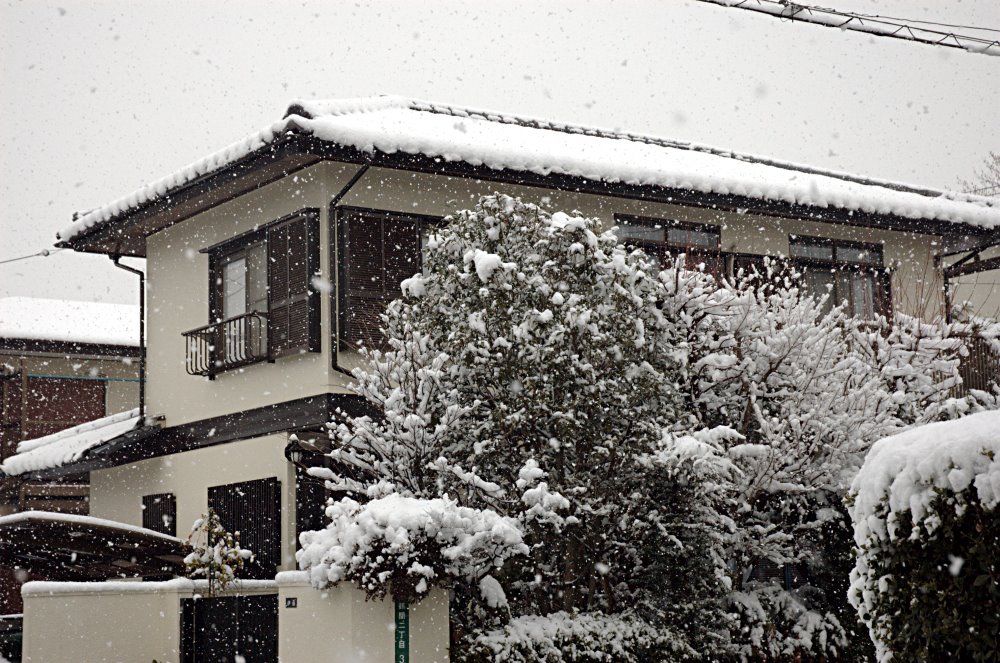
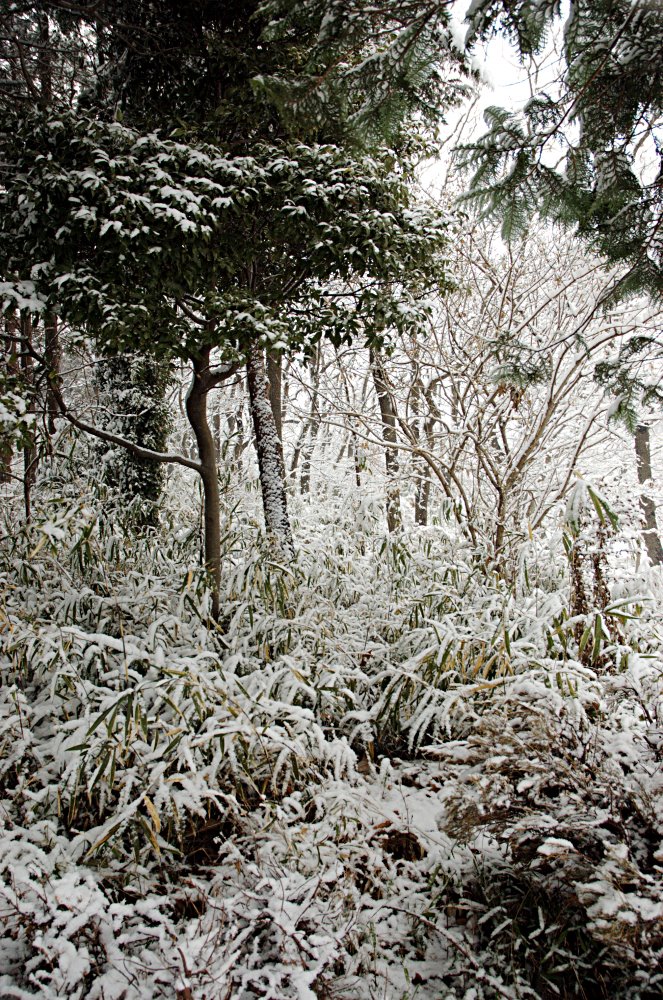
First Tokyo Area Snow of 2005-06


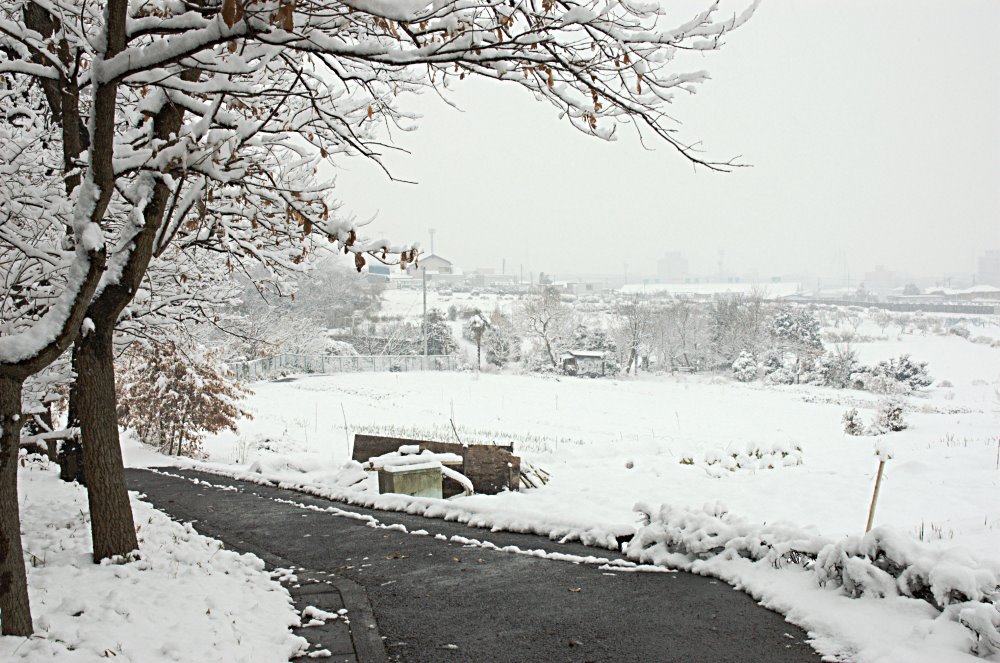
Many Japanese believe that Japan is the only country on earth with four seasons. And here is the unique Japan snow to prove it. (Remember in the 80s or 90s when the Japanese government tried to justify blocking sales of U.S. and other imported skis by claimed that Japanese snow was different than snow anywhere else. Ahhh, uniquely unique Japan.
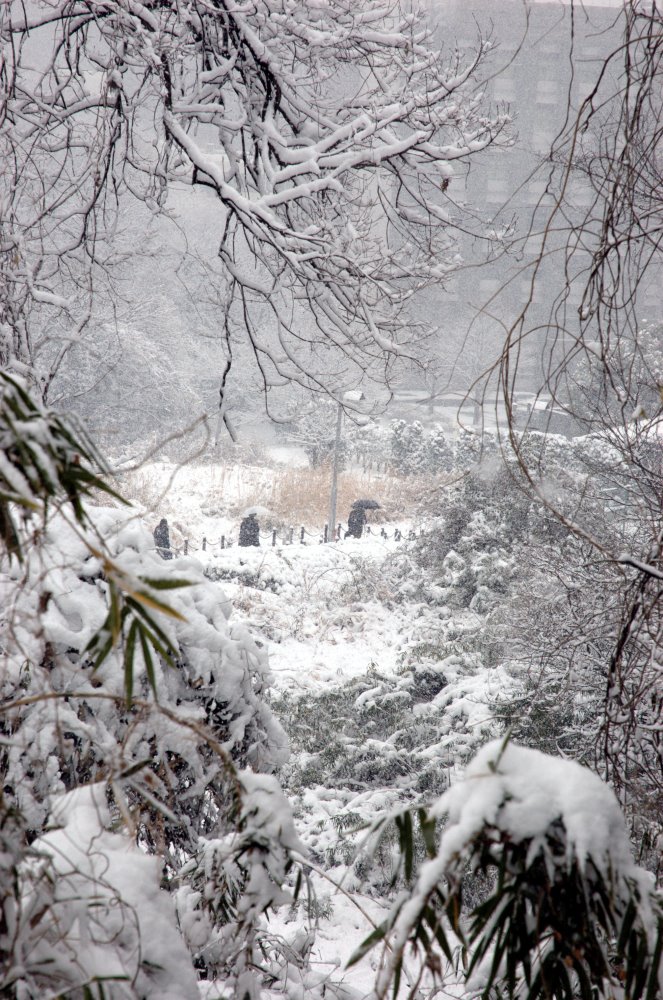
These pics were taken today in Kanagawa Prefecture. Mostly around Minami-Machida in Yokohama, and a few around my place.
Thursday, January 19, 2006

A New Start

How different it is to be actually teaching---or as close as one gets in Japan---English as a foreign language again. I have taken on more classes with my old company where I can actually use some of my education and some accepted teaching principles instead of trying to glob through Berlitz' nonsense using their "method" which they have difficulty defining themselves. I actually know my students! I know what and why I am teaching something, and so do they. How rare that was at Berlitz. Ask a Berlitz teacher why they are teaching something from the Berlitz text---especially the "pronunciation" material and see what the answer is. Nobody knows.

Tuesday, January 17, 2006

Discrimination Against Non-Japanese

I suppose there are actually 2-3 people on earth who do not believe that there is any racial, ethnic, or other discrimination in Japan. Some Japanese may believe that, but most I know acknowledge it exists (except for those who try to give me the window-dressing "tatemae" snow job), but then justify it.

This is a site by a Mr. Arudou Debito who became a Japanese citizen several years ago (Is he insane?) He gained fame (notoriety amongst many) for suing a city in Hokkaido for allowing policies of racial discrimination and later wrote a book about it.

This is his site, http://www.debito.org/ . Should you be interested in how common discrimination is here and how it is supported and encouraged by the Japanese government (who will lie through their teeth denying it), you should visit it. He does piss me off by using "gaijin," a somewhat derogatory term for foreigner (gaikokujin is a bit respectful---if this society can have any real respect for a non-Japanese).

I again have to mention that not all Japanese discriminate against non-Japanese. However, it is part of the history and culture of this society and the Japanese government often actively promotes and encourages racial, ethnic, age, sexual, and other types of discrimination. Recently, the Japanese police and many politicians (e.g. Gov. Ishihara of Tokyo and national figures) supported by the media for the most part tend to blame the rising crime rate in Japan on non-Japanese and basically brand non-Japanese as potential criminals. When you get a society in which people are taught from a young age that they are different in every way (and the difference often turns out to be "better than") other peoples, it is difficult for them to be subjected to this type of lies and propaganda all the time without being susceptible to believing it fully.

Sunday, January 15, 2006

Site for Japan Cyclists

This site is operated by some Japanese cyclists. It has a lot of good information about cycling in Japan. They have held a few organized rides too. If you are interested in cycling (mostly road bikes) visit this site. They have a forum if you have any questions about cycling here too. http://www.japancycling.org/v2/

Monday, January 09, 2006

Law Abiding Japan


You often hear how law abiding the Japanese are. You know they obey all laws and rules. Why, they will even wait for a traffic light to change before crossing a small side street even if no cars are around.

Well, not exactly. These pics were taken at Futakotamagawa station. Notice the no bike parking signs all over the place. Notice the bikes parked all over the place. There is a police station maybe 25 yards away. You can see how the police do their job too. (Which is basically sitting in the box filling out forms and ignoring anything else.)

Friday, January 06, 2006

Preparing for Foreign Tourists


I feel a bit guilty about posting this. It is almost as bad as making fun of English writing on T-shirts, bags and such. I can't resist though. Japan has started on a campaign to attract foreign tourists, but it appears they have a lot more to do. Some of the names of buildings on the map are in English---great tourist attractions like a nursery school and government offices---but nothing else. I really doubt that many tourists will learn Japanese before a visit, especially kanji.

Polite Japan

As everyone "knows" the Japanese are very polite. Just ask a Japanese whom you don't know well and who will give you the fairytale version of Japan. Don't hold it against him/her, because it is more important to give this fairytale version of Japan to a foreigner.

Here is an interesting "rant" from a non-Japanese (Chinese) girl who went to school in Japan. Poor girl, she just doesn't understand the universal, flawless purity of the Japanese. But of course, since she is not Japanese, she could never truly understand wonderful Japan anyway. http://www.livejournal.com/users/lastsmile/6104.html

I shouldn't have to say this, but I suppose that I should: Not all Japanese share those views. It is a part of Japanese society though and cannot be ignored. The idiotic fantasy of many who believe if you just come to Japan and learn Japanese and Japanese customs you will be accepted (like Tom Cruises' charactor in The Last Samurai) is just that---a fantasy.

Visa Renewal

It was that time again, every 3 years I have to renew my spouse visa. Hopefully, this will be the last---or next to last---time as I am eligible to apply for permanent resident status. (No, I have no intention of trading in my American citizenship for Japanese citizenship. What would be the benefit? Rarely would I be considered a Japanese citizen by the majority of Japanese even if I did. "Japaneseness" to the Japanese is racial. Most even consider the Japanese to be a separate "race.")

It is always an adventure to renew a visa. Even though I live closer to the Tokyo immigration office, since I am a resident of Kanagawa, I have to go to the Yokohama office. Getting information in English on the internet about the required documents is almost impossible. You basically have to find out from other foreigners. I had forgotten what was needed, so after searching, I called and was given accurate information. I think they can transfer you to someone who speaks English if necessary. (Should you speak German, Frence, etc, you may have a problem. I don't know.)

Finding the building was another challenge. I could not find it on the map at the station which had nearly every building of importance listed in both Japanese and English. I could not recognize any kanji that I thought had anything to do with an immigration office. So I just walked in the general direction of where I thought it was. Finally, I reached a police box that I remembered from the first time, and I knew it was just across the street. There was no indication that this was the immigration office or any other kind of government office until I went inside. The only kanji that I could recognize was that for Yokohama. (I know about 450-500 kanji. There are over 2,000 used in Japan. Few foreigners learn them all because of the enormous amount of time required. I have heard it takes about 10 years.)

Once I found it and went to the 5th floor, it was pretty smooth going. I did have a few questions to ask, and I went to the information counter. I started in Japanese, but the woman switched to English quickly. She answered my questions---accurately, I believe---and I had everything completed and handed in within 30 minutes. Of course gathering the documents took much more time.

I was lucky yesterday that not many people were there. Now all I have to do is wait and see if I get a new visa. One never knows as things in Japan can often be based on the whims of the bureaucrat reviewing one's application. This is especially true for permanent resident applications where the requirements and standards are very vague.

But you really don't have to worry. If there is a problem, there are holding cells in each immigration center (so I have read) to relax in before you are thrown out of the country. If you are seeking refugee status, you will probably spend all your short and sweet visit to Japan there---if you even get past Narita.

Sunday, January 01, 2006

Happy New Year


It was quite cold for Tokyo today. Cloudy skies all day which are not the norm in Tokyo in the winter.

Happy New Year to everyone, even to Berlitz International in New Jersey, which spent quite a bit of time on this blog late in December. Amazing, since there never seemed to be much concern about employee opinion while I worked there. Well, other than giving lip service to it. Oops...no more Berlitz. No longer my problem.

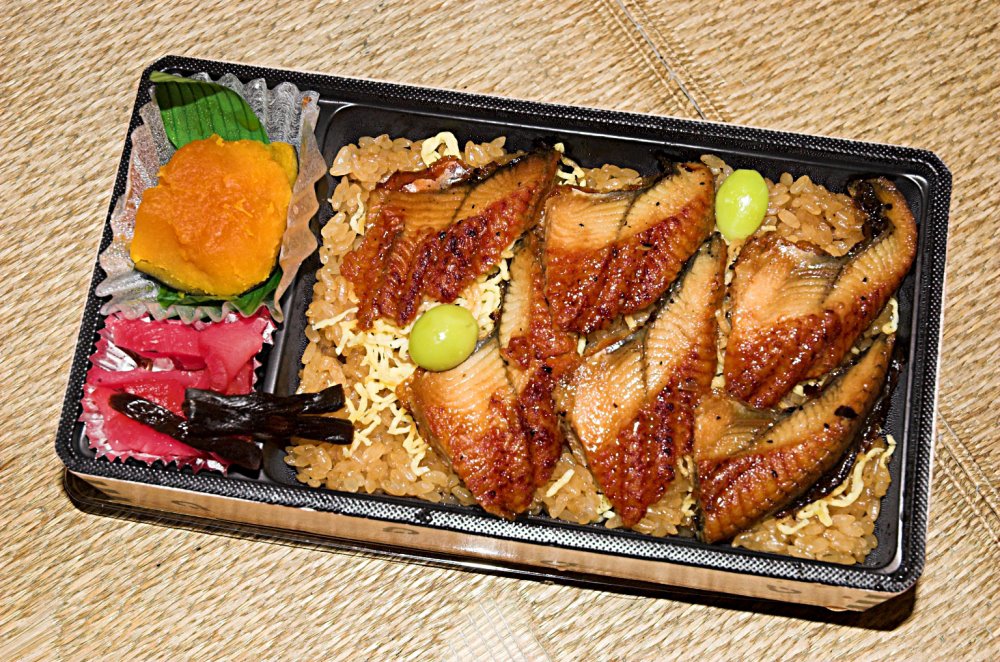
New Year's Eve Lite Dinner


Roast eel, rice, pickles, and squash. Delicious.

Saturday, December 31, 2005

Yokohama Bay


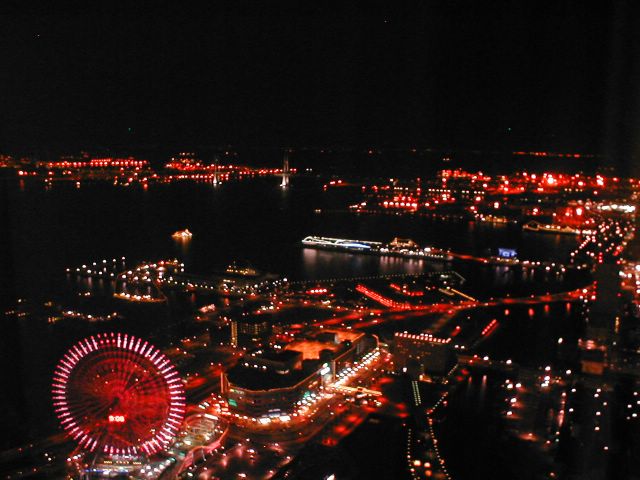
Near Sakuragicho/Minato-mirai. Just behind Landmark Tower and the mall---probably one of the nicest areas in Yokohama. Nice place to relax. Lots of decent shops in the mall. Tokyo is in the background behind the bridge. You can take a nice 1-2 hour cruise on the bay on the cruise ship (Royal Wing) in the middle picture at a decent price. We did so 2 years ago on 30 December and it was very enjoyable. http://photos1.blogger.com/img/151/1191/640/PC310004.jpg
http://photos1.blogger.com/img/151/1191/640/PC300003.jpg
http://japanlost.blogspot.com/2005_02_01_japanlost_archive.html

Sunday, December 25, 2005

Christmas in Tokyo

It's about the same as in the States. The spirit of Christmas is buy, buy, and buy. The non-religious aspect does not bother me at all, as I am agnostic, but I hate going anywhere near a department store. It certainly reminds me of all I disliked about Christmas in the U.S.

I am nostalgic for an American Christmas, though. I would at least like the chance of a white Christmas, and the opportunity to see my family. I miss Christmas music. Even though I can get CDs here, and hear it in department stores, I miss the more traditional stuff. The Beach Boys singing a Christmas carol on a CD at Starbucks, makes me want to run out the door. (Well, the Beach Boys singing anything has that effect on me. Of course, if I get REALLY desperate, I could turn on the military station---810 AM which used to be called FEN, but is now PIGEON or something to do with birds. It has some of the worst music one could listen to, but it is actually stuff popular in some parts of the U.S. Especially bad are the new country music versions of Christmas songs.

Basically, Christmas here consists of buying a Christmas cake. Most taste like they were made by the millions of chemicals with flavor spray added.
A lot of young people use it as more or less a lover's holiday and spend Christmas Eve in a hotel.

The real holiday season starts next Wednesday. The New Years holidays last until about January 3-4. Tokyo is almost deserted as people return to their home towns. It is nice then as the air is clean and one can actually ride a train safely and comfortably.

Blog Time Zone

Apparently, blogspot has its own time zones. My setting are for Japan standard time, but recently, blog sets some other time. For example, the post below was posted on Christmas morning, but the time on this blog is Christmas Eve.

Well, it's a free blog. No customer support, but beggars can't be choosers, I guess. If I paid, maybe I'd have one that works correctly.

Even the spellcheck tool does not recognize "blog."

Saturday, December 24, 2005

Monday, December 19, 2005

So You Want to Teach in A Japanese University or Public School?

You are seriously interested in teaching as a profession. This interests you as much as, or more than, the "mysterious Orient" where you can go on a semi-sober backpacking expedition through Japan doing the "easiest job you've ever had" (an old NOVA recruitment tagline).

If so, perhaps you would like to come to Japan to teach in the JET program, or use your masters degree to teach at what passes for a university in Japan. First, I would suggest that you read this very good, spot on article; Discussion Paper: Language Teaching (English) – Japan
‘Perspectives from inside the school system’
Michael J. Matuschka MACE at http://www.debito.org/PALE/ and then read the book The Myth of Japanese Higher Education by Brian McVeigh : http://www.amazon.com/gp/product/0765609258/qid=1134970779/sr=8-1/ref=sr_8_xs_ap_i1_xgl14/102-9632211-0184936?n=507846&s=books&v=glance .

Afterwards, if you still are interested in coming, you will understand the problems and challenges to some degree, and you will also understand why you will not be taken seriously as a non-Japanese.

Nihonjinron--the Myth of Japanese Uniqueness

Here is a link to an interesting article on this nonsense. http://www.debito.org/PALE/ (See Nihonjinron: Identity, Misconception and Controversy
by Brent Poole.)

Especially interesting is what happened to the author to stimulate his interest in the subject which he discusses at the end of the article. Good for him that he did not prostitute himself to play henna gaijin (weirdo outsider) on TV for a few bucks like many do here. (I have to admit guilt, because to some extent, that is what an English teacher does in Japan. Most especially the eikaiwa entertainers.)

Granted, most foreigners are aware of this myth. Unfortunately, many believe them to be true. Look at the success of the absurdly nonsensical Last Samurai movie. Whenever a Japanese (or baka gaijin) starts a sentence with, "Japan is the only country..." or "The Japanese are the only people who...," you can usually consider what follows to be pure horse manure.

For a good example of nihonronjin and its absurdity (with rebuttal) look at : On Language and Japanese Rational Thought Processes Guest Forum: Where there's no 'will' there's no way By Shin-ichi Terashima, University of the Ryukyus at :
http://www.debito.org/PALE/PALEautumn99.html#tomei

Sunday, December 18, 2005

But as always, the food is delicious


Our tempura lunch at a restaurant in the Futakotamagawa Takashimaya

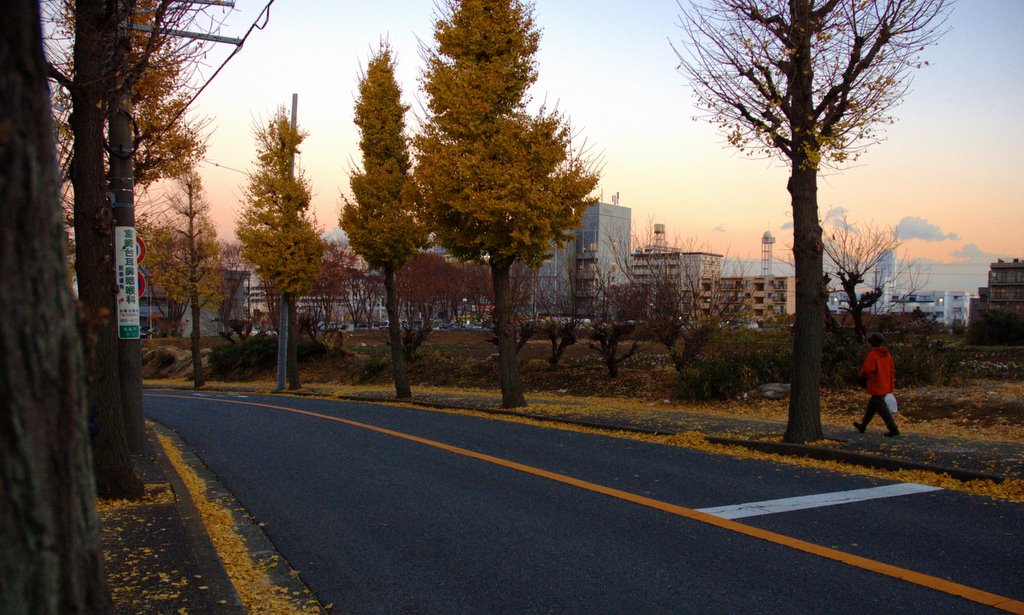
December Autumn/Winter in Tokyo


Well, actually near Miyazakidai station on the Denentoshi line. Notice that the leaves are still on the trees.

Winter?

This morning there is a beautiful, fresh, cold wind blowing with the smell of snow. It takes me back to West Virginia, or Montana, or Washington state after a fresh snowfall.

It is nice and clear in Tokyo today and as usual there is little or no chance of snow, although it has been heavily snowing in other parts of Japan for the last week or so. Too bad!

Tokyoites cannot stand real cold weather. When I visited Kyoto---hardly the coldest place on earth---a taxi driver told us to come in the winter because there were very few visitors then. When I mention this to people in Tokyo, they say "eeewww! Cold Kyoto!!!"

Anything below about 60 degrees is cold in Tokyo. They are like Texans and start putting on jackets at 75-80 degrees. The worst thing is that when it does get cold out, people tend to turn up the heat in offices and department stores to the extent that you sweat. While shopping, you have to take off your coat and carry it or give to the bag holding people who will keep it in storage while you shop (for a small fee).

Friday, December 16, 2005

The End of My Biggest Mistake

Nearly 3 years ago, I accepted a job with Berlitz. The economy had been bad and my hours at my old company had declined. I was looking for a full-time job. Berlitz was recruiting specifically saying that qualified/certified instructors were preferred. Later, when I complained that a trained TESOL instructor would not be happy at Berlitz because he/she could not utilize much of their training, I was told that Berlitz HR did not know that they were advertising for certified instructor until I told them!!! (They did remove it from later recruitment ads in Japan.)

I had declined Berlitz two or three times in the past. I wasn't really interested in using the old, obsolete, disproved Direct method. (When I say disproved, I mean that modern science and research has shown that it was not the most effective way to teach a foreign language. Actually, I believe that it is not bad in Japan where most students want to be told how and what to think and say and expect a strict focus on accuracy and strict correction. It also seems good for those who won't study, i.e., many Japanese. Of course I am not really talking about the real Direct/Berlitz method, but the quasi-audiolinguistic approach Berlitz was using until 2004. Berlitz now uses its peculiar derivative of the communicative approach although I doubt more than 2-3 teachers have a clue what that is.) However, I decided to try it and was also curious about trying the direct method since actually trying a communicative approach was often frustrating.

I again rejected the first offer due to the poor pay and lack of a full-time contract. HR called and reassured me, so I decided to give it a try. I met my first supervisor who was pursuing a master's in linguistics and who seemed to know what he was talking about. Darn, I thought Berlitz was real. Even training was a very quick, bare bones, basic TEFL course--nothing in depth but enough to get someone started. so I thought they must really be serious.

Well, unfortunately, outside of the training section, actual knowledge is scarce. It isn't required anyway, and in fact, if you do have any knowledge it is detrimental. Most supervisors know some of the jargon, but dig about 1mm below the surface and it becomes apparent that they have little clue. In fact, I was told by two different supervisors that it makes no difference what one does in a class "as long as the students enjoy it and think that they have learned something." And that is true. That is the bottom line. That is a quality Berlitz lesson.

This is fine, because only an damned fool would think that he was really teaching in an eikaiwa chain school anyway. It would be like a hamburger flipper at McDonald's claiming to be a chef. (Not offense to McDonald's, they may not be working as a chef there, but they still have to cook something edible. Unlike an eikaiwa teacher, they can't get away with pulling some garbage out of the trash and calling it a "quality" product.)

Many eikaiwa kyoshi's try to do a good job most of the time. They get little or no real training unless they get it at their own expense. They don't really bother to try to research more effective ways to teach. An example is Berlitz pronunciation. Teaching pronunciation is not intuitive. You have to have had some training or at least made an effort to learn. A very few have. Most don't and just fake it with the Berlitz book. Why not? Berlitz won't reward any efforts in this area. Since they don't have the same students each class, it won't help the student either. Most of the teachers are decent people. Unfortunately, they really don't know of much outside of Berlitz/NOVA/GABA so they tend to believe all schools/companies in Japan are the same.

On Christmas Eve, I will go to "work" at Berlitz for the very last time. It has been only a part-time job for me for the last year, but a full-time worry. I never know where I will teach, who I will teach, or what I will teach until the night before at best. I never have any preparation time, am almost never able to use non-Berlitz materials, almost never able to use anything I learned in college about TESOL (in fact, I am required to do things I know to be detrimental).

I have had my contract hours moved so that Berlitz wouldn't have to pay for having me work outside of contract hours. (For example, my contract stated my hours as 445pm to 915. Outside of that I should have been paid an extra 1920 yen per class minimum. My supervisor, often under instruction of the director, would switch my contract to cover lessons outside of contract so they could save paying me for the extra classes. It would have been ok occasionally if they had asked first like they are required to do.)

When I informed HR, it took over a month to get partial backpay because the IS whined so much about having to check all the pay records. In the end, I gave up on some of it. For example, they would switch our lunch time (break time by our contract) and not pay us for working that time. The excuse was "well, the idea is 11 units, 5 before lunch and 6 after, or visa versa. It is all ok as long as it is 11 units." The problem was, this is not what was in the contract or on the schedule. This is not what Berlitz work rules say. And it is certainly not what I agreed to. Extend that logic---a part-time worker is required to work 20 units. Could I come to work at 4 am and wait until 6pm and claim that I was available for 20 units and take the rest of the week off with full pay? After all, the idea is 20 units per week. When the units are is not relevant. Prior notice and agreement of a schedule change is not relevant.

Oh well, I am done anyway. Before joining Berlitz, I was warned never to work in an eikaiwa chain. Now I know why.

Saturday, December 10, 2005

International Child Custody Disputes in Wonderful Japan

I suppose that this is not news and most people with more than a passing acquaintance with Japan are aware of it, but Japan is a haven for Japanese spouses of an international marriage who kidnap children.

Many non-Japanese have found out the hard way that the Japanese government and court system will ignore international arrest warrants, international child custody decisions, international kidnapping, visitation rights, and more. As in most things, your rights as a foreigner are very weak if they exist at all. You certainly will be in serious trouble if your dispute is with a Japanese. Decisions seem to be based on the whim of the judge in the case more than law.

You can read some of the personal stories of non-Japanese custodial parents and how Japanese "courts" have served them here: http://www.crnjapan.com/pexper/en/

Naturally, of the hundreds of cases, there must be some cases where the parent has regained legal custody, visitation rights, or had other legal victories. After all, Japan does have a firm, non-discriminative legal system right? Those are listed here: http://www.crnjapan.com/success/en/ . All 0 of them as of this date.

But don't be too critical, after all, this is a traditional Japanese custom which, as a baka gaijin, you can never understand. (Understand in the Japanese sense, meaning agree with.)

Wednesday, December 07, 2005

Rush Limbaugh and Torture

Was just listening to Rush Limbaugh once again excuse and explain away what some limited parts of the U.S. military has done against prisoners (such as stripping people naked and putting a leash around their neck and walking them like a dog to excite and stimulate the perverts among the troops) as humiliation, not torture. I remember when this first came out, Rushy was asking "Who died? Did anyone die?" as a way to excuse what was done. I guess then as long as you killed no one anything was acceptable. Well, it turned out that some people were killed---or at least physically beaten. I never heard how Limbaugh excused that. Imagine what that hypocrite would be saying were it Americans or our allies who were stripped naked and paraded like a dog for the entertainment of perverts.

This is the same clown who, during the first Gulf War, pretended it was a movie by assigning actors who would play the roles of major players in that war. Himself as Scwartzkoff (sp) as I recall.

I remember when he first started in about 1989. His show was fun and entertaining and took a much needed right of center view of events as opposed to the normal left-wing stance of the major media. God, only the talk show hosts Phyllis Donahue and Larry King were around before him. (Larry does not believe in reading books before interviewing the author. A real intellectual.)

Since 1992 when Bush #1 had finished invading Panama (why did we do that again?)and was running for reelection, Limbaugh has simply gone to the nutter crowd. GW 1 invited Rush to the White House because Rush was critical of Bush and showed some signs of leaning toward Pat Buchanon. After that visit, he was never the same. In fact, he now seems to be the official voice of the Republican party, because all he does is parrot the Republican line. Anyone who disagrees with him is a not a "real" conservative. Only Rush is. And while it used to be funny to hear him brag that he was always right, now I think he is deluded enough to believe it.

I only hope that the people who call in and agree with him are only a small number of worshippers. I can't run around defending Americans if many are as ignorant as he has become. Anyone in Japan and probably other countries can pick that up and listen to it. How utterly embarrassing.

Saturday, December 03, 2005

Thanks to the Japanese Government...

we are gonna be safe. Last week a 7 year old Japanese girl in Hiroshima was murdered. A Peruvian with a history of child molestation has been charged with her murder.

Initially, the focus was on the murder of such a young girl and the search for the sleaze who killed her. After the Peruvian was arrested, suddenly the focus seemed to change to the fact that he was not a pure Japanese, but a foreigner. (He was 1/4 Japanese. I guess his evil non-Japanese genes overpowered his pure, innocent Japanese genes.) One Japanese female TV reporter was so upset that she even slipped and used the word gaijin. She immediately corrected herself and said gaikokujin. Good thing or else someone might of thought her to be a rude bigot which does not exist among the pure Japanese people.

In various newspapers today, there are reports of a new government commission set up yesterday to help stop these crimes by the evil filthy, AIDS infested untrustworthy non-Japanese foreigners. You see, a crime is more a crime if committed by foreigners. Thank God (or the Emperor?) that this bunch has been formed.

Unfortunately, there was another 7 years old girl who was found murdered yesterday. These murders are NOT uncommon in Japan. I wonder why. I remember about 18 years ago in a so-called love hotel that there was a film of naked 7-10 year old girls swimming. I guess this was to help some of the Japanese clientele to get it up. Strangely, it tended to have the opposite effect on me. But, then again, I am just an evil gaijin who could never understand the wonderful Japanese. Thank goodness that 2-3 years ago the Japanese government decided to finally take action on the child porn being produced in Japan. At the time, it was one of the leading sources in the world for child porn. See this for more details http://www.atimes.com/japan-econ/BF16Dh01.html , also here to see why the child porn problem in Japan continues http://www.japantimes.co.jp/cgi-bin/getarticle.pl5?nn20050518f1.htm

Anyway, if the other young girl was murdered by a Japanese, I wonder if the government will set up a committee to address crimes committed by Japanese perverts? Here are some examples of crimes committed by Japanese that they could look into: http://www.crnjapan.com/abuse/en/

January 1, 2006 update on the Japanese child porn law. According to today's Asahi Shimbun, the Child Porn law was just amended in July 2004. As originally passed 6 years ago, it only made the sale of child pornography illegal, but the 2004 revision made photographing or exchanging it illegal. In the first 11 months of 2005, there were 441 arrests under this law, 274 more than in 2004.

Sunday, November 27, 2005

Sales in Japan

One of the interesting things about sales in Japan is that occasionally you will find things "on sale" for the same price as before the sale. Often this is after a 30% discount.

One example is a bike store I usually shop at. This store always discounts most bikes and parts. The discount price is exactly the same as other discount bike shops. A few weeks ago, the one in Akasaka-mitsuke, Tokyo (Y's Bike Academy) had such a "sale." Most of the discounted prices were the same as before, but I noticed that they had raised the "regular" price, thus giving the 30% discount that they advertised. I told some Japanese friends about this and they said it is common.

Another thing you have to watch for is at department stores during year-end sales. They will bring in merchandise from somewhere else and put a nice red discount price on it. There may be no mention of a regular price. In my experience, this stuff is usually some cheap junk not even worth the sale price. I suspect that if they stocked it regularly at that price they could never sale any.

All of this is apparently legal in Japan. Even if it isn't, like most things in Japan, you can openly violate the law unless you piss off the wrong person (the wrong person isn't likely the average citizen) and then they will come after you. But they will only come after one violator. It is rare that they would try to clean up a whole industry even if the violations were widespread.

Wednesday, November 23, 2005

Kyoto

We went to Kyoto (by shinkansen)for a few days last week, the 17th and 18th, just after Bush and Koizumi had visited. We stayed in a suite at the Westin Miyako Hotel---nice, but not really worth the price.

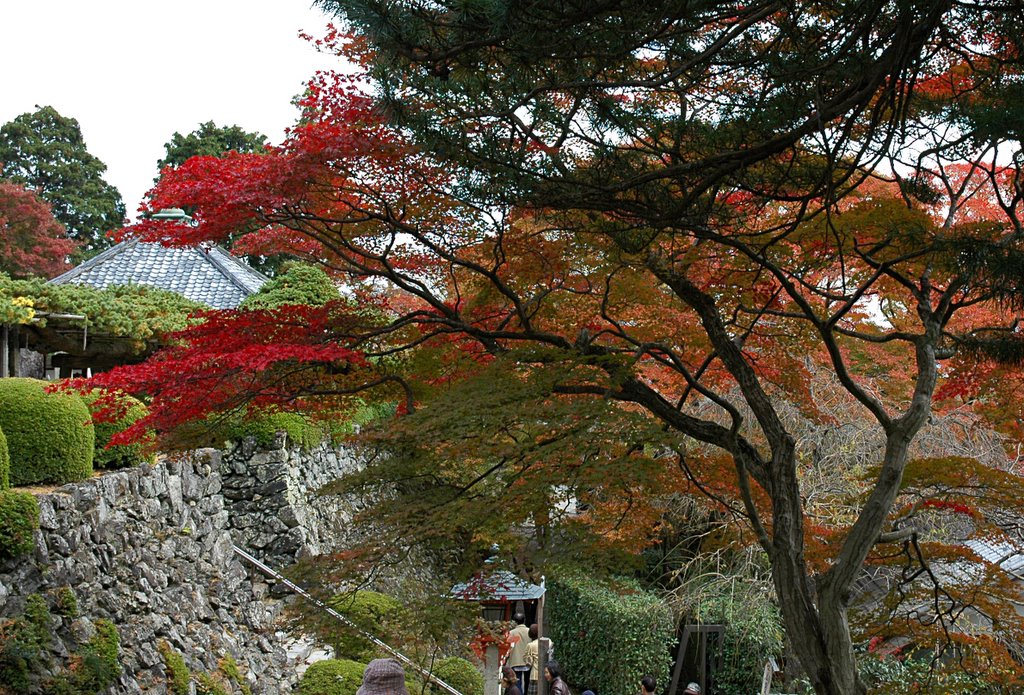
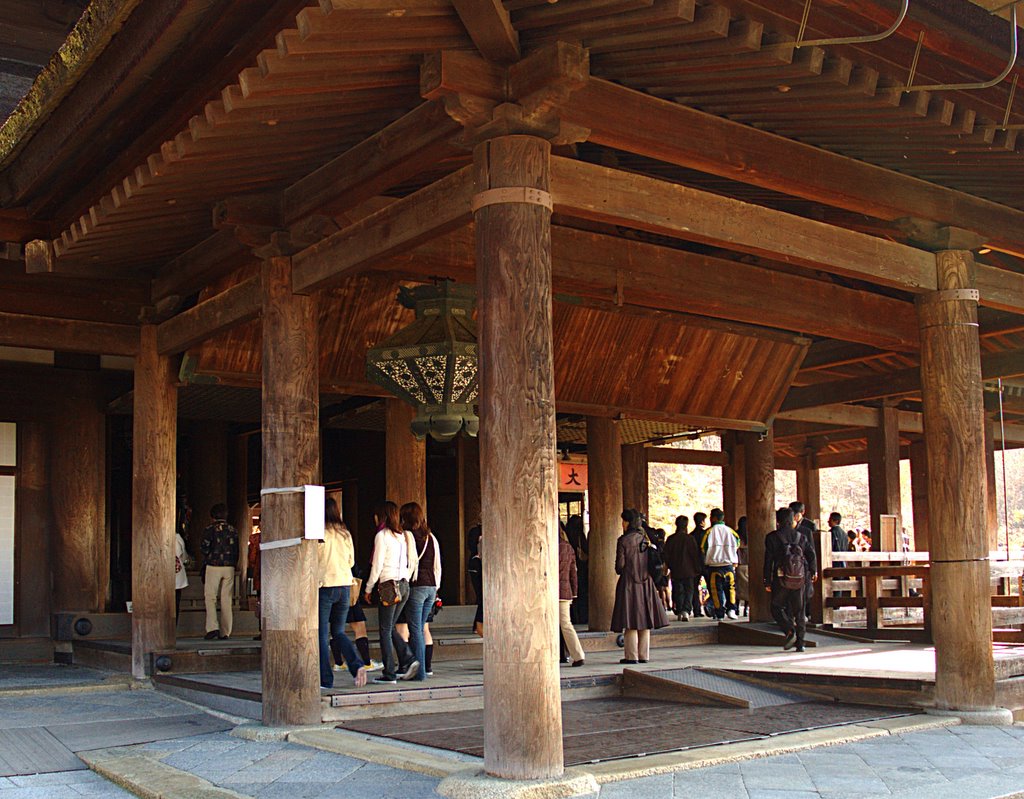
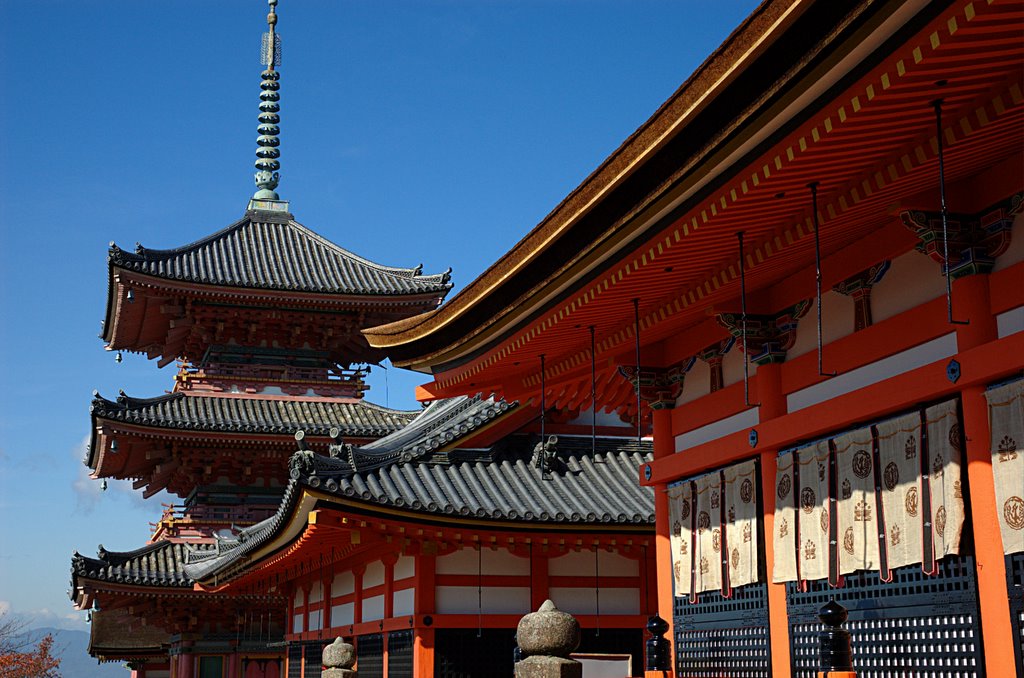
It was the first time in 18 years since I had been there. The thing that struck me was how clean the air seemed. It also seemed like a small town compared to Tokyo, which I guess it is. It was very relaxing until Friday morning when we went to see Kioymizu temple, one of the most famous in Japan. It was almost as crowded as rush hour on the Denentoshi line. Filled mostly with high school kids. Gotta say it was less then impressive compared to other places I have seen in Kyoto.

The autumn leaves were almost in full color---perhaps they are this week. One of the taxi drivers told us the best time to come is in the winter if we want fewer people. WHen I tell that to people in Tokyo they are shocked---who wants to go to cold Kyoto in the winter! So the cab driver is right. We will probably go again then and visit smaller, less popular spots.

One of the biggest surprises was a small okonomiyaki shop (Kiraku) we ate at on Thursday night. Some of the most delicious okonimiyaki either my wife or I have ever eaten. Also had delicious steamed mushrooms with bacon. It's just a few minutes walk downhill from the Westin Miyako Hotel. Can't wait to eat there again. And SHOCK!!! the staff was actually friendly and would talk to foreign guests in English. That is something I never see in Tokyo---at least not to engage in conversation. In Tokyo, it is only that required to get the money. Even in Japanese.

Kiyomizu in Kyoto--absurdly crowded


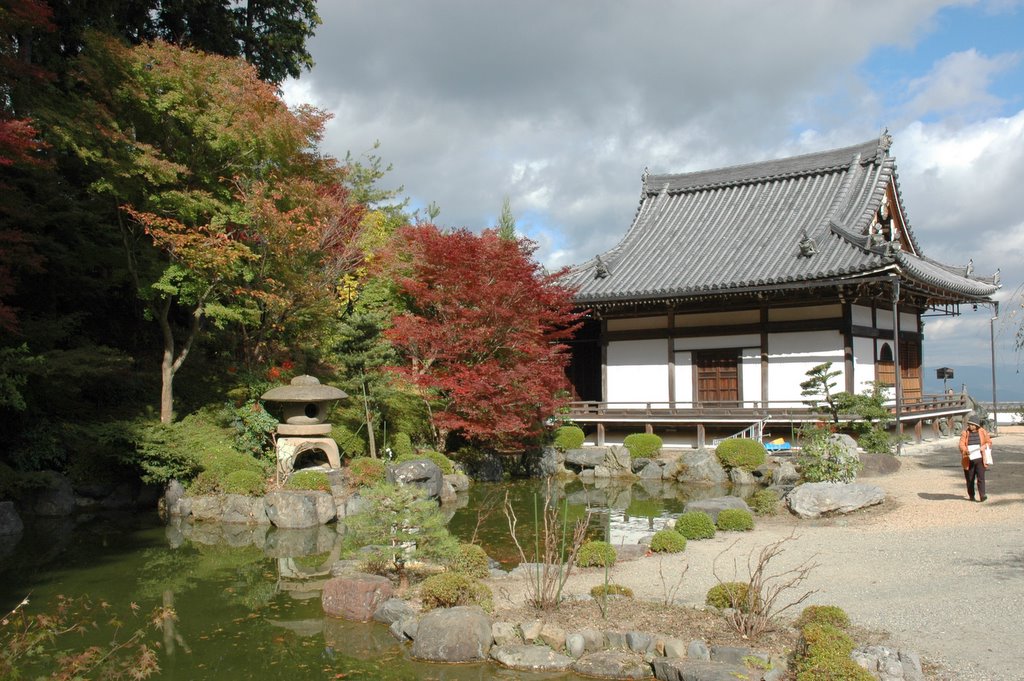
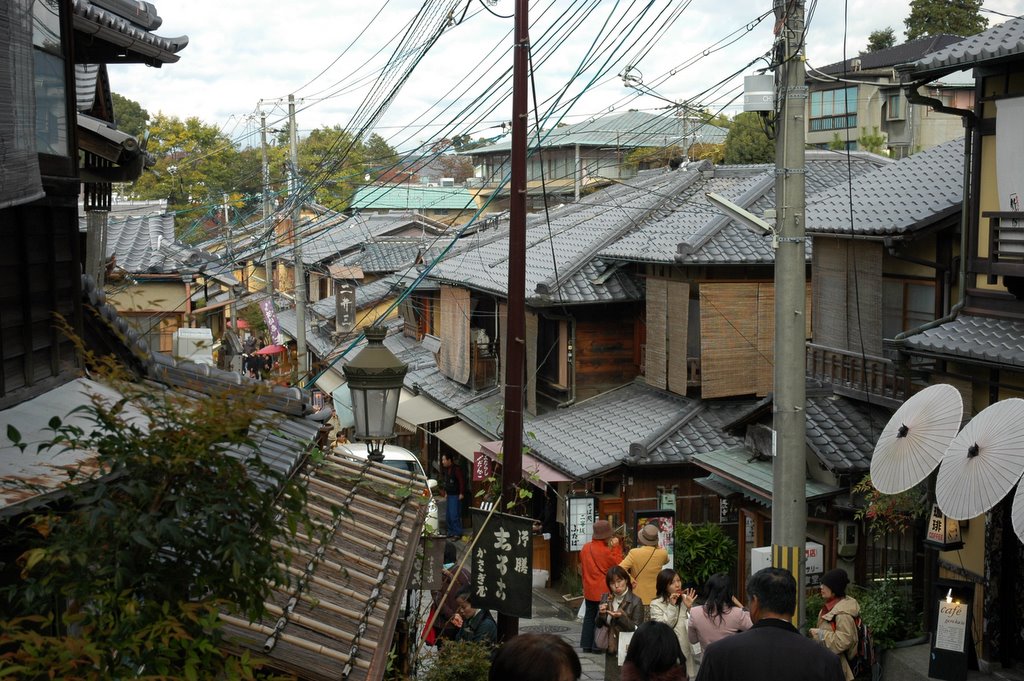
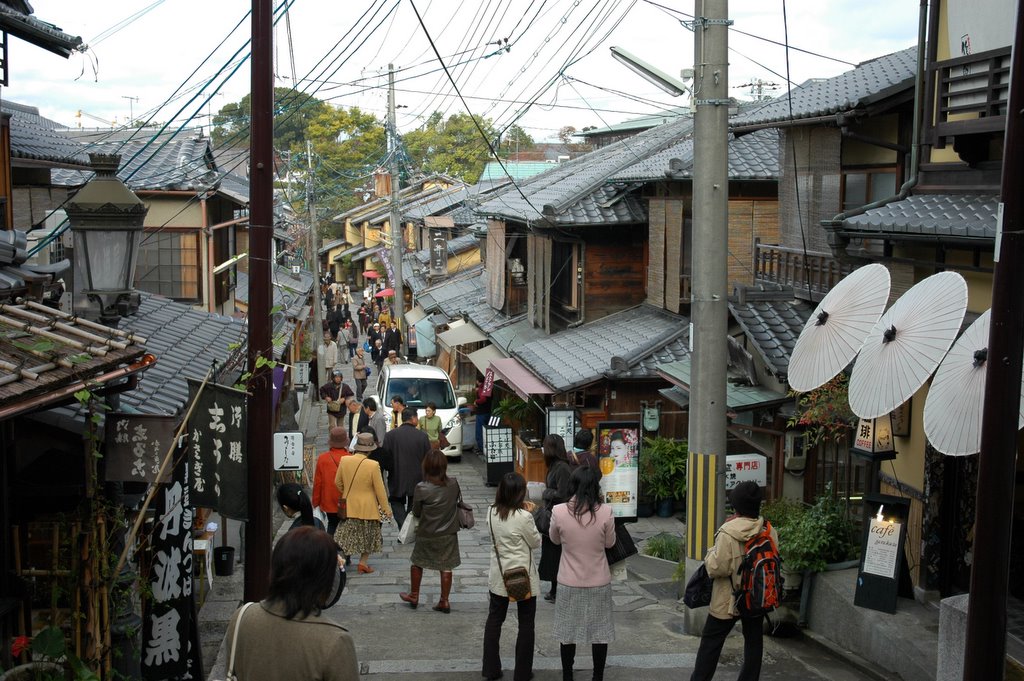
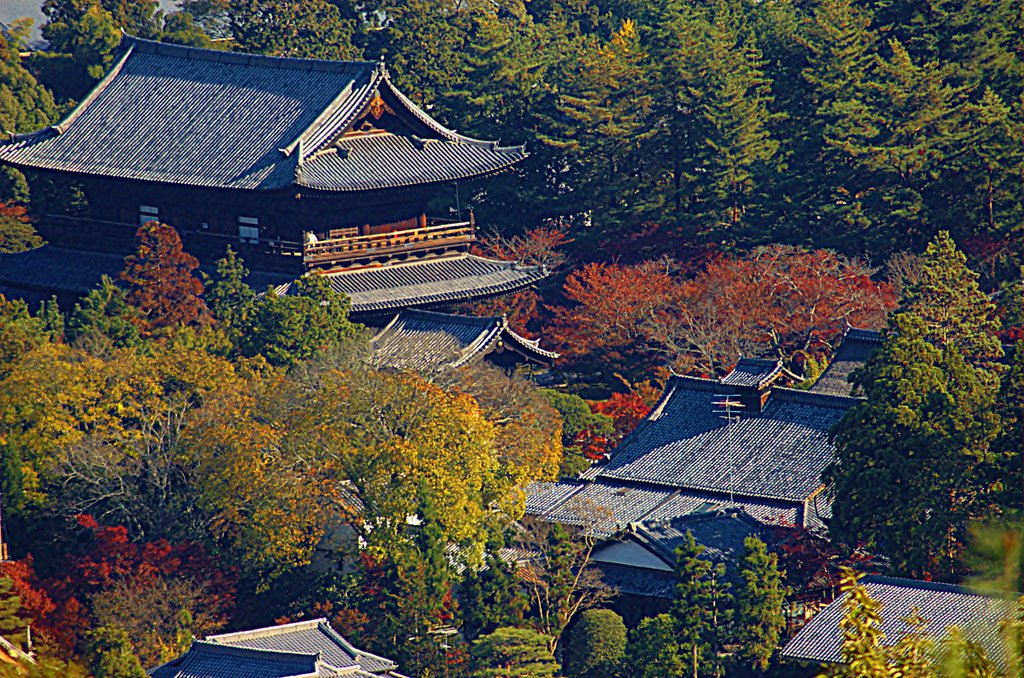
Kyoto Nov 17-18 views of side streets, unknown temple and Westin Miyako Ryokan


More Kyoto pics


Monday, November 14, 2005

A Interview with Tojo's Granddaughter

The right wing has been becoming increasingly influential in Japan for at least 10-15 years---witness the stubborn insistence by Koizumi visiting Yasukuni Shrine where convicted war criminals are enshrined along with ordinary soldiers who died in war.

Ms. "Tojo's" explanations and excuses for Japanese wartime aggression and crimes are nothing new---one often hears this stuff in Japan even from those who are not especially sympathetic to the right-wing views. However, I think it is a bit of a shock to see an answer like this:

Q: China has the right to protest though doesn'tÂ’t it? Japan invaded their country and killed millions.

Tojo: China played no part in the San Francisco Treaty. Countries that were not involved in the treaty or the Tokyo Trials have no right to talk about war criminals now. So why is China complaining now? The Japanese fought the Nationalists (KMT) not the Communists*. It is now a completely different country. China and Japan later signed a treaty and war criminals and prisoners were released. The word war criminal (senpan) does not exist in that treaty. They should abide by that treaty. It is unforgivable (zettai yurusanai) that they continue to interfere in our domestic affairs.


Naturally she denied any Japanese atrocities in Nanjing, ducked a question about Unit 731, and seemed flabbergasted that the current emperor (kinda) admitted that the Imperial family may be of Korean descent.

You can read the full interview here: http://japanfocus.org/article.asp?id=445

You can also read a short article by Karl Von Wolferen (the author of The Enigma of Japanese Power---one of the best books ever written on Japan, but dated now). He explains how the US support of Japan has allowed its continued isolation and how this isolation is now complemented by US isolation.
http://www.japanfocus.org/article.asp?id=446

*Actually, the Japanese did fight the Communists as well as the Nationalists. The Communists were to some degree content to let the KMT fight the Japanese more than they did as they figured that Japan, sooner or later would have to abandon China and the the Communists could pick up the pieces. But to say that the Japanese never fought the Communists shows either that Ms. Tojo is being dishonest, or deeply ignorant of what went on in China or both. Of course, this is not really the point of the problems which exist between China and the Japanese people about World War 2 anyway.

Friday, November 04, 2005

Just let me cut you off

Another informal bike race today. This time it was with a Japanese guy about 50 years old. When I first saw him, he was going at a decent pace on an old steel framed bike with fenders. He was wearing sweats. Now I know that these are the guys who can occasionally be very, very tough. The young guys on nice bikes are usually posing and acting pretty. When it gets tough, they fade and drop almost immediately.

I passed this guy even though I hesitated at first. I am getting out of top shape now---a big reduction in mileage and very little focused training since August. He was going just fast enough to that I knew if he challenged me that I would have to really hustle much more than I wanted to today.

I passed and he was on me fast. I held at 22-23 and he did not drop. I did several short sprints to try to drop him at 25-28 mph, but he got right back on me. Even up a few "hills" he held--unbelievable for most around here. This was tough today as my heart rate was hitting 184bpm--when I am in top shape it rarely hits this high with that ammount of effort. Then we entered a curvy populated area for a kilometer or so and could not really do much and had to slow.

After about 1 mile of this (2.5 total), we were headed toward a switchback and he cut through the grass to get in front. Immediately, the pace slowed even though we were in an open area now, but he still was going over 20 mph. At first I thought he was taking a very un-Japanese turn at the front letting me draft instead of just leeching off of me. I was on his wheel for maybe 2 kilometers. (There is a HUGE difference between ridng behing another rider in the draft and being in front. I would guess the energy required drops 15-20% at times.)

Suddenly he sat up---a sure sign of tiring---and then he looked back and waved me by saying that it was dangerous. I laughed at that and stayed on his wheel. I knew if I passed I would be doing all the work again and he would be sitting back there leeching off of me until the end. No way. Strange that it wasn't dangerous when he was drafting me.

Anyway, we came to a split in the road and I went uphil to the street and he stayed on the river bike path. We rode parallel for a while and he was hammering to keep even with me, but ultimately backed off. (Nobody to pull him?) I went up the road another 2-3 kilometers and turned around to go home and saw him on the way back.

It would have been a nice day and nice little run if it hadn't have been for the gutless "abunai yo" hypocracy he pulled at the end. Usually, most Japanese just reach for their water bottle and pretend to be overwhelmed with thirst when they give up.

I wonder if he thought just cutting in front of me was all he would have to do. Did he figure I would just give up and stop or slack off? That is common in Japan. People cut in front of you all the time then slow way down. It seems all they want to do is cut you off and the block your path. This happens just walking down the sidewalk or jogging or anything. People will kill one another to be the first out of a train and as soon as they are out the door they will stop and block everyone else who is trying to get out. They seem to do this without thought. Apparentely, all you gotta do is jump in front of people and you have acheived whatever you are trying to acheive. Maybe it is away society bangs down the nail that is sticking up . You are going somewhere? Faster than me? Well, let me cut you off and slow you down like me.

Friday, October 28, 2005

New School at Miyazakidai Station

Just saw a new school has opened at the station. There already is a NOVA scam eikaiwa school there, but with luck this school will be successful. There are many small, privately run language schools in Japan, many of which are owned and staffed by professionally trained teachers--real teachers who could teach in places other than Japan. The cirriculum, the teaching, the service as far as individual attention to students goes is usually much, much, better than the NOVA, Berlitz, GABA eikaiwa chain schools are willing to provide.

There has been an increase over the last several months in people looking to study English. So I suspect that the Japanese economy is really beginning to strengthen, at least until the Japanese government kills it by raising interest rates and taxes. I have had to stop accepting new students, and will be able to become mainly self-employed except for occasionally courses for JAL Academy and a few other very select companies. I hope to keep the part-time fake teaching job at Berlitz until the end of the year to get my vacation and holiday pay. However, I am so eager to start, and eager to drop that "job" that I don't know if I can hold out.

There is a market for people who will really work to learn a language--as is necessary--in Japan and who are not simply looking for a chance to observe and be entertained by a baka gaijin clown. At least I have been finding some. Granted, it is a small group. I will see how long it lasts.

Friday, October 21, 2005

Goober the creepy 7-11 clerk

Next to our apartment is a 7-11. Now this 7-11 sucks already because they only have stocked shelves in the early morning and at noon. It's mostly bare the rest of the day except for stuff nobody ever buys.

There is a clerk there---let's call him Goober---who gives me the creeps every time I see him. He constantly---and I do mean constantly---snorts deeply and loudly like he is trying to pull up a huge goober. He does it 3 or 4 times a minute. He can't have a cold unless he has one everyday 365 days per year.

I try to avoid him when he is at the register because I don't want this disgusting creep touching my food even if it is in a package. If I am unlucky enough not to avoid Goober the Creep, I wash the packages and my hands well after getting home. I suppose I should shop elsewhere as he stocks food when he isn't at the register.

Thursday, October 20, 2005

Getting an ass-whuppin' in a bike race

When I am riding or training along the Tama river (Tamagawa) I occasionally get into informal races. They rarely last long---2 minutes or less on average. Usually some Japanese guy on halfway decent bike all fitted out in his bike clothes---often old U.S. Postal team colors---is waddling along at 16-17 mph. When I go to overtake him, he decides he wants to race and will get up and go into an all out sprint reaching speeds of 17.3 mph. Beautiful sprints in slow motion without actually appying force to the bike, just body weight. I always hate this because I will have to waste energy to squash the sprint, or he will stay in front for 25-30 more seconds until he figures I ain't gonna just give up and wimp away because he accelerated. Often these guys just want to get in front with no clue of how they will hold it and seem shocked that being in front means ya gotta work like hell to stay there.

Well, today before my cold started hitting bad, I was doing a light zone 3 ride. I was averaging about 18-19 mph into a slight headwind, nothing spectacular. I was passing all the pretty tricked-out guys in their U.S. Postal or whatever clothes (riding at 15 mph) when I noticed a guy on my ass.

I hate that too, because most Japanese guys will ride your wheel to take advantage of the draft, but never take a turn pulling. He passed me a little while later so I figured I'd get on his wheel and ride for a while then stomp his twiggy ass. Well, this guy kept going, he wasn't weakening. I was waiting for the tell-tale Japanese sign of defeat---pretending to be thirsty and grabbing the water bottle while slowing. (This means, "Yea, buddy, I would have kicked your ass, but I gotta take a drink." Right.)

He never went for his bottle. In fact, after we turned a switchback--and he stayed on the correct side of the road---I realized he was not a Japanese, but a westerner. The shaved legs of a cyclist should have given that away sooner. Then, after we went up a small hill (while he remained seated---Japanese often have to stand to go over an anthill), he really started going. I was on him at 23-25 mph for maybe a kilometer or more with my heartrate monitor hitting 178bpm (just below my apx maximum of 181), but I let myself slip off his wheel and he accelerated slightly again. I could not catch him. I was dropped. My ass was kicked.

Actually, I enjoy losing more than winning, because of maybe 100 or more informal races I get in each year, I win 98 without trying. I can even take on and beat pacelines here. That's insane. Nobody in his right mind would take on a paceline of decent cyclists anywhere else as beating them would be impossible, a fool's errand. Actually, most of the pacelines aren't really pacelines. The riders don't seem to understand the purpose of them. One guy gets in front and stays in front---at 17mph. The guys who beat me are always older Japanese guys in their 40s and 50s. Young guys are no threat.

But this guy today really did a number on me. It has been a long time since I was dropped so badly. I have been getting so overconfident here---I remembered how hard it was in the States to race and beat younger or older guys. It's damned tough if you have a group of good cyclists racing. Very, very tough to win.

Well, I was brought back to reality today. I only wish I could have more chances to ride with, and compete against, decent, serious cyclists---Japanese or not. Then I can really measure how I am doing without being misled because I beat a bunch of tatemae pretenders all the time.

Wednesday, October 12, 2005

Another view of Berlitz from Thailand.

Think what I say about Berlitz is tough? Read this from a popular EFL website in Bangkok. http://www.ajarn.com/Education/Language_Schools/Stickman/review

Berlitz

The producer of excellent phrase books and tapes has two schools in Bangkok. Berlitz has developed their own system for language teaching that uses very few of the accepted practices and works on a kind of "drill it into the brain and hope the students remember it" approach. Many "sex tourists" work here and this school will take ANYONE who walks through the door wearing a shirt and tie. They have a mandatory one week unpaid training course to complete before you start working for them - about 50% of people who do the course stay on to work there.

Within their buildings they have microphones in all of the classrooms that allow the branch manager to listen in and hear what the class / teacher are doing / saying. There are regular checks to ensure that you are following the Berlitz way and you will be condemned if you are teaching using anything other than the fixed narrow minded and downright stupid Berlitz approach. Needless to say, this school is for unqualified teachers.

This school is for those with no teaching qualifications and no desire to think about what they have to do. If this is you, it's probably your dream job.....sex tourists take note!


This sounds so true...just like Japan, although Berlitz has claimed to have moved away from the old Direct and audiolinguistic methods they used until a few years ago. Now they claim to be using the commuincative approach, but nobody there understands it at all. It takes a little more than 1 week of half-assed training to use that complex approach.

Yea, take classes there. A lot of people do and enjoy it. Berlitz makes a lot of bucks for doing it. The Japanese lap it up. It is "fun" and "teachers" correct a lot.

Friday, October 07, 2005

A grumpy old Ojiisama on the Tama

Was down on the Tama River this afternoon taking---or trying to---take some photos. As a was packing to leave, some old man (old is relative in Japan, people start acting elderly at 35-40) came up the path pushing his granny bike. He stopped and started staring at me.

Now this isn't so unusual, some Japanese, mostly the gummers over 50 still stare at foreigners. I know this is rude, and the Japanese are, of course the most polite people in the universe, but staring at foreigner doesn't count.

I often star back when this happens, but this old gummer looked like he might start gibbering to me. So I ignored him.

In a few seconds he started grunting. Again, not unusual as a lot of these old gummers grunt with even the slightest effort such as inhaling.

I took a few minutes getting my stuff packed and as soon as I moved a few inches right, old grampa grabbed his clunker flew up the path like a bat out of hell as fast as he could waddle. He was muttering and cussing to himself, and then it dawned on me. I was standing on the path he wanted to take. He didn't just say "excuse me" (sumimasen, shitsurei shimasu etc) he just stood there grunting like an old sow with a corn cob up her ass. I was supposed to have understood the meaning of his grunt.

Wow. I stood in the way of an old gummer like an idiot and ignored him. I am turning Japanese! Damn. Payback at last!!!

What many students think of Berlitz (or any) English teacher

At my now part-time income supplement job at Berlitz, I was doing an exercise with elementary ability level students. I was helping them make a recruitment ad, so I used Berlitz as an example knowing I would get this kind of answer.

Question: What skills does a Berlitz English teacher need?
Answers:
1. Can speak English.
2. Is usually polite.
3. Is funny

So basically, they assume Berlitz teachers need no knowledge, education, or skills. I don't disagree much about this for Berlitz or many other eikawa chain schools. However, many Japanese assume this for any non-Japanese English teacher anywhere.

If they want an intelligent, well-educated and trained teacher, they go to Japanese teachers. For native-speakers, they look for entertaining clowns---basically language whores---for "classes" which are primarily "fun." The idea that interesting, effective, and useful classes are possible or desirable is something many never think about.

An example of delusionary--or at best, wishful thinking

I found this posted on the internet a year or so ago by an apparently frustrated and disgusted teacher fed up with the fake teaching going on in schools in Japan. He or she seems to be living in a dream world. Gone nutter, perhaps. This is what happens when you teach here too long. Poor person is about as nutty as me if he/she thinks the Japanese want real language teachers/teaching. They'd have to really study, do homework, and accept responsibility for their own success or failure. Ain't no fucking way.

As does every other place in Japan, schools often hire people just out of college (or even high school if they can get a visa) with no teacher training or experience. They figure that all you need to do to be able to teach a language is speak it. Naturally the result ain't so good. But who cares, they pay big bucks for it and their lack of success reinforces the nihonjinron fallacy that the Japanese are uniquely unique and can't learn English because their brain functions on the opposite side. I am not making that up!

(Some universities are even hiring eikaiwa cahin school "teachers" to teach for credit courses in Japanese universities. People who may be without even a BA or BS degree teaching university courses. Only in Japan.)

Below is the post by this guy. His predictions turned out to be completely wrong so far. There has been no increase in demand for qualified teachers in Japan. Never was. Never will be. Most people prefer clowns. Give 'em what they want. Let 'em keep throwing money away. Who the hell cares?

With the new school/business year starting soon it is necessary to state what is happening in new Japan for your readers.
First, the boards of education, companies, schools have been pressured to produce well educated students, clients, etc. With
that in mind, the disappearance of the entertainment style of being with children will soon disappear. It is so great to see and feel that now. For some time, in some areas of Japan, they were allowed to entertain, sit by their desk and file their nails, be a clown in general...That time has gone from a lot of boards of educations and companies.
There has been a drastic reduction in those types of people near Tokyo and just recently spreading to various areas of Japan this year and in the up and coming year. Instead, their jobs have been reduced, amalgamated with other contracts, or for some of them outright cut.
In replacement of these individuals is the return of the qualified teacher with experience, the background, and the knowledge of how to have children behave academically in the classroom. As a result of this drastic change, the professionals who are here now are swamped by the demand for good, quality education....the prop, theatrical way is out......the foreigner standing in the room is out.......the idea of performace[sic]in teaching is a tremendous part of the market and WE cannot and I MEAN cannot meet this demand!
The idea of textbooks at all levels of education is going to be coming to Japan....so we the professionals eventually will have all we need here.
Goodbye to the clowns
Alleluia

Posted: March 11, 2004

Thursday, October 06, 2005

A word of advice

Do not come to Japan to "teach" English unless you have some other reason for being here. A year may be o.k. if you are interested in teaching as a career, but don't come and work for one of the big entertainment industry chain eikaiwa (conversation)schools. You will learn nothing except bad habits and have a good chance of being cheated out of money. You will deal with people of the most questionable ethics, and if you stay with it much you stand the chance of accepting and adoptingthe low standards and unethical. Dishonest behavior that is common in many of them.

Even teaching in good companies is not something you want to do long term if you don't have to. You can't really teach when you cannot test, when students won't do any outside class work, and won't write because they very mistakenly believe the only way to improve speaking is to sit around and shoot the shit.

The pay may seem good, but it isn't. It won't increase much over the long term. Companies like Berlitz rarely give annual raises and make a huge effort get you to pay for their responsibilties(e.g. Berlitz will often send "teachers" to different schools and refuse to reimburse them for the transportation costs.)

Again, do not make the mistake of coming here with an idea of a career in TESOL. Even in universities, if you have an MA in TESOL, my understanding is that you will have little actual input as an instructor, but simply expected to teach and shut the fuck up and let the brilliant Japanese staff make the decisions. After all, you are a happy boy airhead baka gaijin who could not possibly understand the Japanese or Japan.