I have always thought---and tried unsuccessfully to put into words---that Japan's reputation as a leader in the fight to reduce global warming or in about any other environmental issue was/is highly exaggerated. In fact, in many areas of environmental conservation/preservation, Japan is anything but a leader or role model.
Andrew DeWit has published a piece on Japan Focus: The G8 Mirage: Toyako, Japan's Potemkin Village, and the Environment which I wish that I could have written. He starts out by listing some of the often overly enthusiastic foreign and domestic media reports on Japan's environmental record especially as far as energy conservation and CO2 reduction is concerned. He then goes over some of the statements of Japanese politicians and bureaucrats who naturally want to add to the idea of Japan's special---dare we say unique?---role in this fight. Then he notes:
The Japanese elite enjoy the brand-name benefits conferred by “Kyoto,” but have made little attempt to meet its explicit targets or achieve its proposed trajectory towards more stringent and comprehensive mechanisms.
(I recall that Japan did not ratify the Kyoto Protocol until after Bush had walked away from the agreement. This was in 2000 or 2001, 3-4 years after Kyoto. Yea, very enthusiastic.)
He then shows that although Japan is "at best on par with" the EU, it is not the global leader in the energy efficiency and environmental fields. He uses data from the German Watch’s Climate Change Performance Index (compares emissions trends and climate protection) which showed that Japan is dropped from 39th place in 2007 to 42nd in 2008 while China (of all places) improved from 44th to 40th in the same period.
One of his more interesting points is that while Germany's (and others) economy was growing faster than Japan's from 1997-2007, its energy consumption was falling while Japan's was increasing. During this period Germany's population was growing while Japan's was---and still is---falling.
Dewit then explores other areas of energy use in Japan, and ends with a look at what two Japanese environmental experts Iida Tetsunari of the Institute for Sustainable Energy Policies, and Kameyama Yoshiko of the University of Tokyo-based National Institute for Environmental Studies have to say about the myths and distortions of the Japanese leadership. Their research shows that Japan actually slipping behind and will not even be able to meet the Kyoto target of a 6% energy cut this year.
There is much, much more information in that article. It is the kind of research and writing that is needed concerning Japan, but is rarely ever found in the mainstream media. They are too busy reporting on fantasy Japan.
Showing posts with label Kyoto. Show all posts
Showing posts with label Kyoto. Show all posts
Monday, July 07, 2008

Friday, March 21, 2008
Are Japan's leaders merely readers on climate change? Japan Times headline.
A very simple answer: Yes, if that is not giving them too much credit. Since the Kyoto Accord was signed in Japan, there seems to be some belief that Japan is a world leader in fighting global warming. The nihonronists and members of the Department of an Imaginary Japans like to spout this as it goes right along with the "special" relationship with nature that Japan mythically has. Some of the right-wing nutjobs even count their own brand of environmentalism as part of their ideals, so no doubt they would love to believe that Japan is or should be the natural leader in this.
Strangely though, Japan did not ratify the Accords until Boy George pulled the U.S. out of the agreement. (OK, most countries curiously declined to act until Bush said the U.S. would not participate.) In addition, one often reads/hears about how difficult if will be for Japan to become even more energy efficient than it already, anyone who lives in Tokyo ought to be able to think of numerous was that Japan could easily reduce energy usage and emissions further. The use of proper insulation in homes and less wrapping/packaging, for example.
..."Fukuda's speech at Davos was compiled by officials of the Environment Ministry and the Ministry of Economy, Trade and Industry...those bureaucrats are actually controlling policies on global warming to ensure they are ineffective and insufficient...
Tetsunari Iida, [from the Tokyo-based Institute for Sustainable Energy Policies] explained the government, greatly influenced by big energy industries, hammered out the targets — targets which have actually been preventing the promotion of renewable energy. Read the full article at The Japan Times here.
The good thing for the US is that Boy George will soon be a former president like Bubba Clinton and we won't hear much from him unless his wife---god forbid---runs for president. For Japan, it is likely that the same bunch of hair-dyeing, barcode-headed old geezers mainly from the LDP (and the bureaucracy) will still be running the country for the foreseeable future. So leadership from Japan on the issue is about as realistic as the uniquely special relationship that Japan has with nature.
Sunday, May 06, 2007
Kyoto Protocol and Japan
I have to admit, once agin' I'm all confused. Sort of like when I repeatedly hear how polite folks are in Japan and then notice that it ain't exactly true.
Anyway, as everyone knows, people in Japan have a deep mysterious (and genetic) respect for, and love of nature that no other people have. It's the only country with four clearly distinct seasons so this is natural.
But I wonder if this is true, then why don't we get homes with effective insulation? Hot water pipes are bare, so we waste energy by losing the water's heat much more quickly than we would if they were insulated. Walls and ceilings have a bare minimum of insulation too. Windows are often single-pane. Our apartment costs as much as an apartment in Manhattan cost me in the fall of 1999, but 2 of our windows are not even designed to close tightly---air always leaks through. Not loving nature as much as the natives do, I had to put plastic sheeting over them to keep heated or air conditioned air inside.
I wonder why things are wrapped individually at the grocery store checkout in smaller plastic bags. Why do I get a plastic straw with every small 500ml juice or milk carton? Can't we just open it and drink from the carton? Why do the clerks at Precce wrap each glass bottle in a sheet of plastic foam? Do the bottles often break when carrying them in Japan? If so, does that small thin piece of foam help? Naturally these things originate in ancient Japanese tradition and culture, but one would assume that with such a great love of the natural environment that perhaps nature's health would take precedence over customs. But then again, I am not a pure Japanese, so I probably misunderstand the purity of heart that allows this seeming contradiction.
I also wonder, when I walk through Akihabara---Akiba---or other such areas in the middle of the summer, why are many shops operating their air conditioning full blast with the front doors open? Yes, the cool air is very attractive and can make one want to enter the shop, but wouldn't a nature-loving, Fujiwara-reading, neo-bushidoist be more concerned about the waste and environmental damage?
These are just a few things which seem to contradict the love of nature and the stance against global warming attributed to Japan. It seems that the only motivation for energy conservation is the extraordinary expense to consumers. Wow, that seems so human. I am sure that there is an explanation for all this. I am also pretty sure it is all just cultural thing and even though this stuff seems like waste, it really isn't and my perception is all due to the fact that I don't understand Japan. It's different here. Up is down. Black is white. Coercion is not coercion.
Anyway, as everyone knows, people in Japan have a deep mysterious (and genetic) respect for, and love of nature that no other people have. It's the only country with four clearly distinct seasons so this is natural.
But I wonder if this is true, then why don't we get homes with effective insulation? Hot water pipes are bare, so we waste energy by losing the water's heat much more quickly than we would if they were insulated. Walls and ceilings have a bare minimum of insulation too. Windows are often single-pane. Our apartment costs as much as an apartment in Manhattan cost me in the fall of 1999, but 2 of our windows are not even designed to close tightly---air always leaks through. Not loving nature as much as the natives do, I had to put plastic sheeting over them to keep heated or air conditioned air inside.
I wonder why things are wrapped individually at the grocery store checkout in smaller plastic bags. Why do I get a plastic straw with every small 500ml juice or milk carton? Can't we just open it and drink from the carton? Why do the clerks at Precce wrap each glass bottle in a sheet of plastic foam? Do the bottles often break when carrying them in Japan? If so, does that small thin piece of foam help? Naturally these things originate in ancient Japanese tradition and culture, but one would assume that with such a great love of the natural environment that perhaps nature's health would take precedence over customs. But then again, I am not a pure Japanese, so I probably misunderstand the purity of heart that allows this seeming contradiction.
I also wonder, when I walk through Akihabara---Akiba---or other such areas in the middle of the summer, why are many shops operating their air conditioning full blast with the front doors open? Yes, the cool air is very attractive and can make one want to enter the shop, but wouldn't a nature-loving, Fujiwara-reading, neo-bushidoist be more concerned about the waste and environmental damage?
These are just a few things which seem to contradict the love of nature and the stance against global warming attributed to Japan. It seems that the only motivation for energy conservation is the extraordinary expense to consumers. Wow, that seems so human. I am sure that there is an explanation for all this. I am also pretty sure it is all just cultural thing and even though this stuff seems like waste, it really isn't and my perception is all due to the fact that I don't understand Japan. It's different here. Up is down. Black is white. Coercion is not coercion.
Friday, October 27, 2006
Kyoto

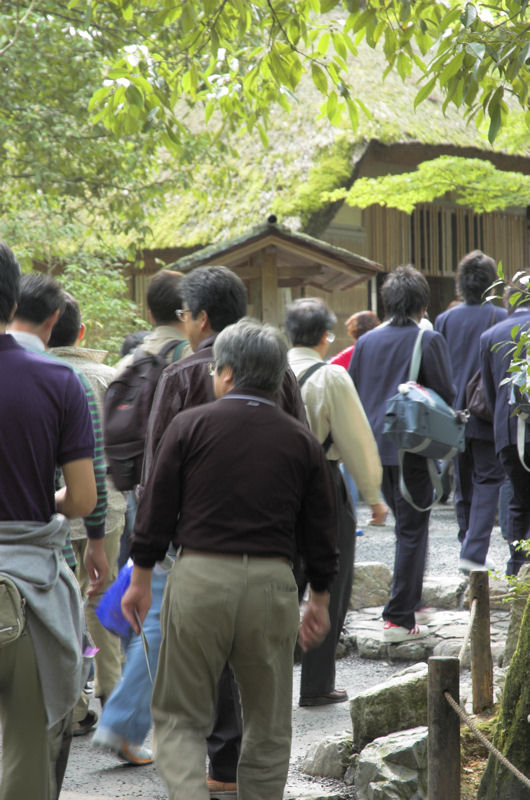
Took a quick trip to Kyoto, but unfortunately there was a big festival going on Sunday which met it was extremely crowded. Had to cut some of our plans. In a way it was like Tokyo, people pushing and shoving us, cutting in front, generally being rude But of course they were tourists, most likely from Tokyo. What else could we expect? An occasional "excuse me"? Not in Japan!
Saturday, December 24, 2005


Wednesday, November 23, 2005
Kyoto
We went to Kyoto (by shinkansen)for a few days last week, the 17th and 18th, just after Bush and Koizumi had visited. We stayed in a suite at the Westin Miyako Hotel---nice, but not really worth the price.
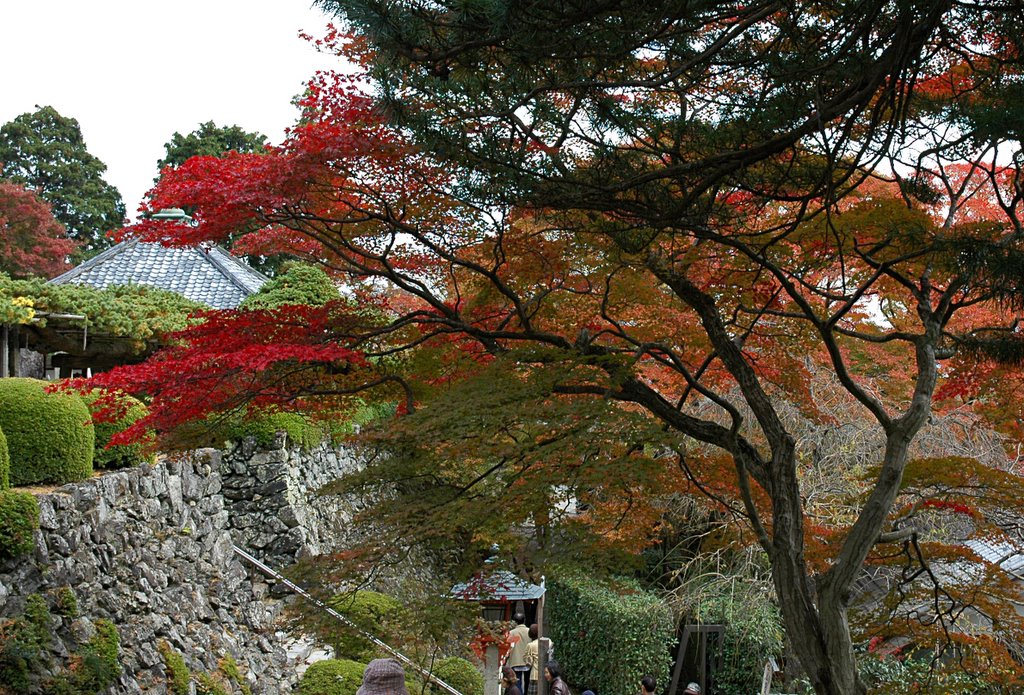
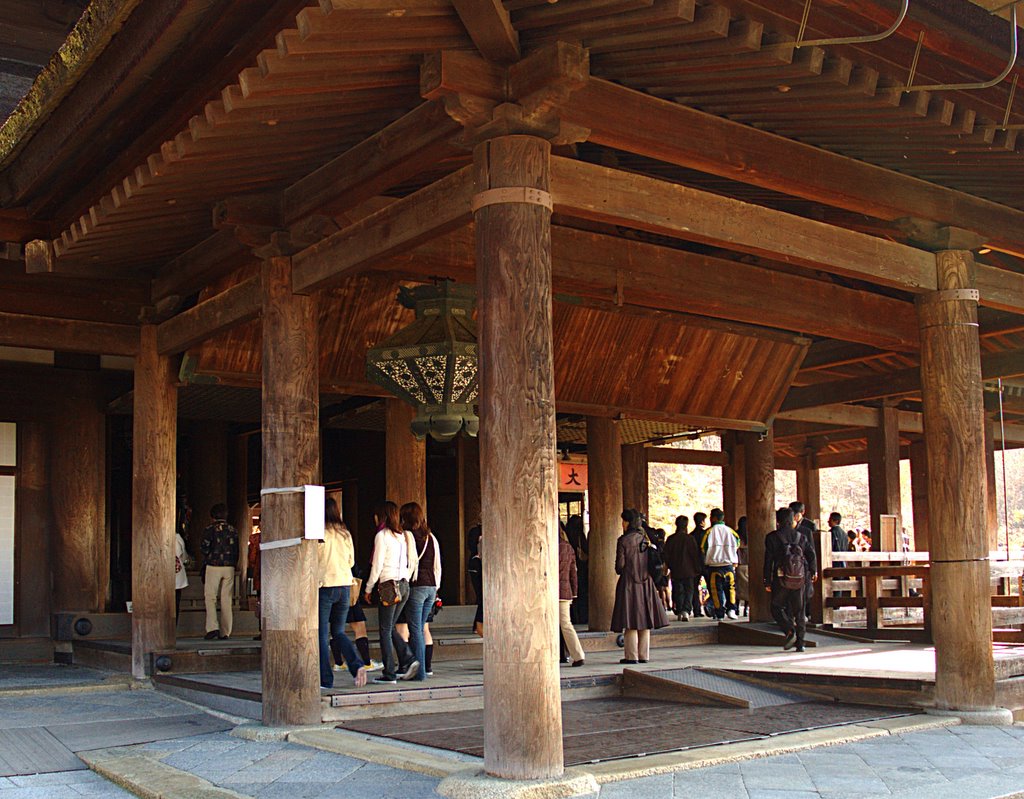
It was the first time in 18 years since I had been there. The thing that struck me was how clean the air seemed. It also seemed like a small town compared to Tokyo, which I guess it is. It was very relaxing until Friday morning when we went to see Kioymizu temple, one of the most famous in Japan. It was almost as crowded as rush hour on the Denentoshi line. Filled mostly with high school kids. Gotta say it was less then impressive compared to other places I have seen in Kyoto.
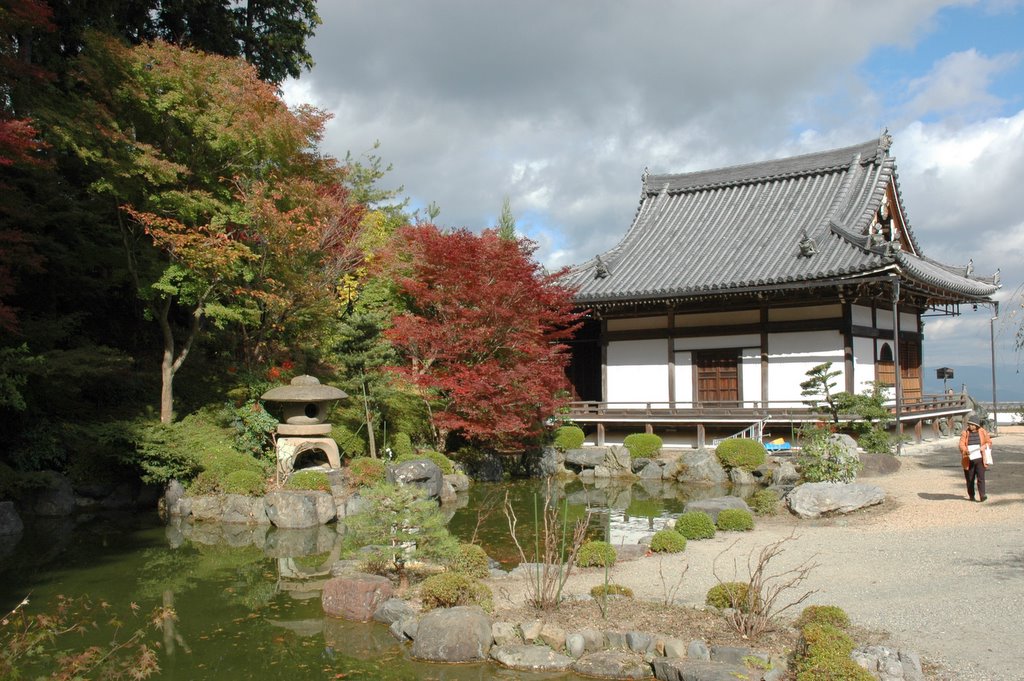
The autumn leaves were almost in full color---perhaps they are this week. One of the taxi drivers told us the best time to come is in the winter if we want fewer people. WHen I tell that to people in Tokyo they are shocked---who wants to go to cold Kyoto in the winter! So the cab driver is right. We will probably go again then and visit smaller, less popular spots.
One of the biggest surprises was a small okonomiyaki shop (Kiraku) we ate at on Thursday night. Some of the most delicious okonimiyaki either my wife or I have ever eaten. Also had delicious steamed mushrooms with bacon. It's just a few minutes walk downhill from the Westin Miyako Hotel. Can't wait to eat there again. And SHOCK!!! the staff was actually friendly and would talk to foreign guests in English. That is something I never see in Tokyo---at least not to engage in conversation. In Tokyo, it is only that required to get the money. Even in Japanese.
It was the first time in 18 years since I had been there. The thing that struck me was how clean the air seemed. It also seemed like a small town compared to Tokyo, which I guess it is. It was very relaxing until Friday morning when we went to see Kioymizu temple, one of the most famous in Japan. It was almost as crowded as rush hour on the Denentoshi line. Filled mostly with high school kids. Gotta say it was less then impressive compared to other places I have seen in Kyoto.
The autumn leaves were almost in full color---perhaps they are this week. One of the taxi drivers told us the best time to come is in the winter if we want fewer people. WHen I tell that to people in Tokyo they are shocked---who wants to go to cold Kyoto in the winter! So the cab driver is right. We will probably go again then and visit smaller, less popular spots.
One of the biggest surprises was a small okonomiyaki shop (Kiraku) we ate at on Thursday night. Some of the most delicious okonimiyaki either my wife or I have ever eaten. Also had delicious steamed mushrooms with bacon. It's just a few minutes walk downhill from the Westin Miyako Hotel. Can't wait to eat there again. And SHOCK!!! the staff was actually friendly and would talk to foreign guests in English. That is something I never see in Tokyo---at least not to engage in conversation. In Tokyo, it is only that required to get the money. Even in Japanese.


Subscribe to:
Posts (Atom)
